Which videographer in Beirut you need depends less on the camera than on the situation in front of it. Someone filming a live conference has to get it right the first time. Someone filming an interview has to get clean sound and a relaxed speaker. Someone filming a corporate film has to make an organization look the way it wants to be seen. Someone filming a documentary has to earn the trust of the people on camera. All four are called videographers, and they are four different jobs.
This guide helps you name your job, shows what to look for in each, and is honest about when a freelancer is the right call and when a team is. If you are still deciding between one person and a crew, our earlier guide to hiring a videographer in Beirut covers that side of the question in more detail.
What kinds of videographer are there in Beirut?
Search for a videographer here and you will find freelancers, small studios and production companies side by side. The useful way to sort them is by the job, not the label:
- Event videographer. Films something that happens once: a conference, a festival, a launch. Judged on coverage, sound from the room and how fast usable material arrives.
- Interview videographer. Films people talking: testimonials, expert interviews, founder messages. Judged on audio, lighting and how comfortable the speaker looks.
- Corporate videographer. Films for an organization's own channels: company films, product films, staff stories. Judged on polish, consistency with the brand and how well the approval process is handled.
- Documentary videographer. Films real people in real places, often on location and in difficult conditions. Judged on access, ethics and patience.
Many good videographers do more than one of these. But each has a different skill at its center, so it is worth asking which one the person you are hiring has actually done, and asking to see it.
Which videographer do you need for an event in Beirut?
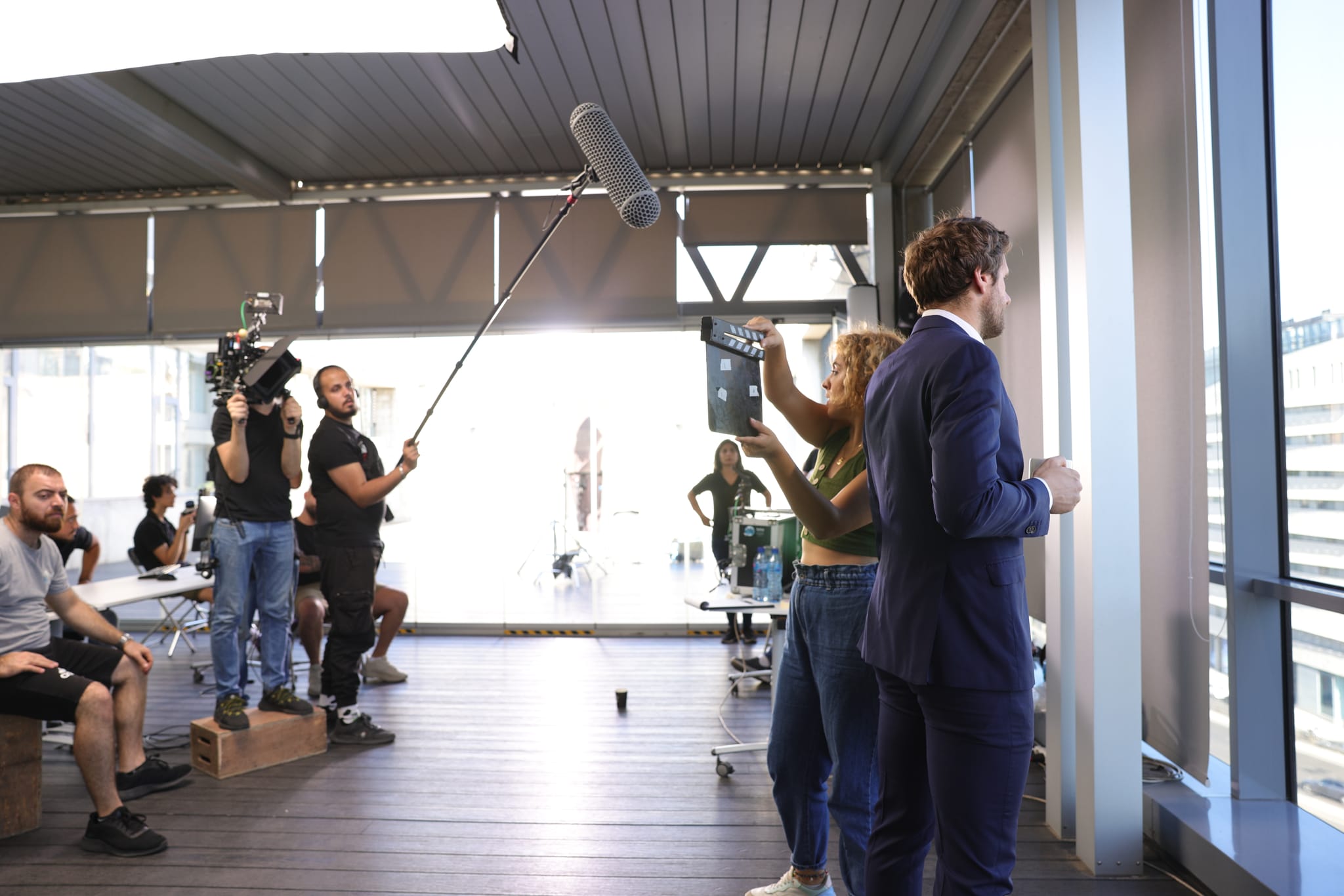
An event cannot be re-shot. That single fact shapes everything: you want more than one camera angle, a clean feed of the speakers' audio, and a plan for what happens if something fails. A wide shot, a close shot and someone watching the audience is a normal starting point for a panel or a ceremony, and that is more than one person can cover.
At Fine Line, our event coverage is multi-camera. For live work, we typically run four to five cameras at 6K, and every camera and audio channel is recorded in isolation, so clean material is ready for editing straight after the event, with edited deliverables following in a few working days. We have streamed for organizations including the Agence Universitaire de la Francophonie, Phoenicia University, the Peace Research Institute Oslo, Mercy Corps and the Friedrich Naumann Foundation. The details are on our live streaming page, and how live streaming works for events explains what sits behind a broadcast. If the audience is split between the room and a screen, see hybrid event streaming in Lebanon. For what event coverage includes and how to brief it, see event videography in Beirut.
A smaller event, such as a workshop or a product evening, may only need one camera and one microphone. A good freelancer can do that well.
Who should film an interview or testimonial?
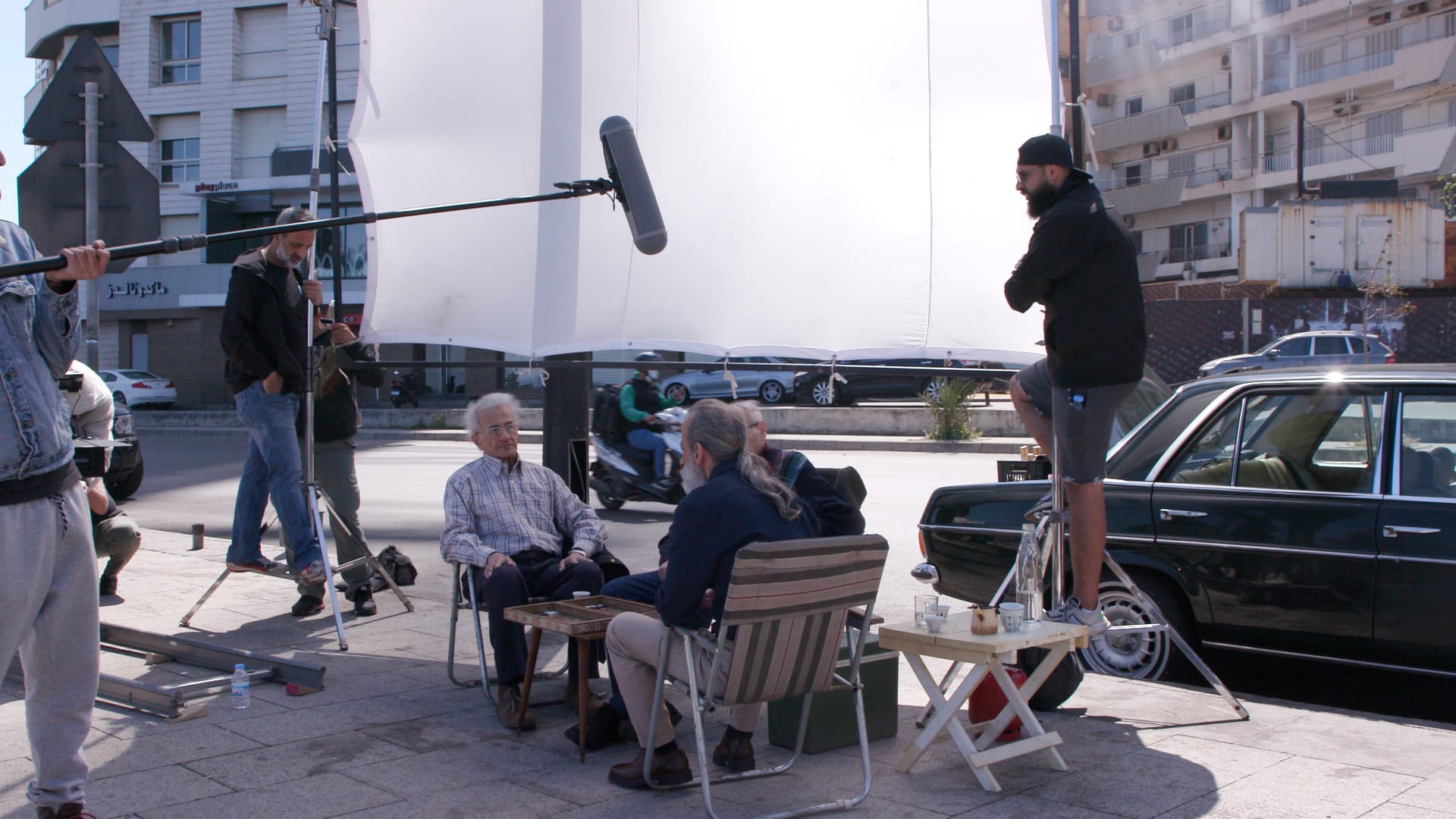
Interviews look simple and are easy to get wrong. The viewer forgives a soft shot long before they forgive bad audio. So the questions that matter are how the voice is recorded, whether the light flatters the speaker and whether someone is listening on headphones while it happens.
Interviews also carry more weight in a film than their length suggests. In our work for Dar Global, interviews with Elie Saab were recorded separately in Lebanon and woven into the property footage filmed in Qatar, as described on the Les Vagues film page. In the MMKN documentary, interviews with the organization's president, school principals, current students and former beneficiaries carry the story.
If you want controlled light and sound, an interview does not have to happen in your office. Our studio in Hamra is set up for photography and video, with professional lighting, sound and a green screen, and can be hired on its own.
What kind of videographer makes a good corporate video?
A corporate video is usually less about one shoot day and more about everything around it: the script, the people who need to approve it, the versions for different channels, and the edit. The person with the camera matters, but so does who handles the rest.
That is why corporate work tends to suit a team. For the launch of ROCK Mutual Insurance, Fine Line handled all the video and photography: the corporate and product shoot, four TV commercials and an internal campaign of employee stories. You can read the full story in our ROCK Mutual Insurance case study, or see the film page.
Quality is worth paying attention to here. In Wyzowl's State of Video Marketing 2026, 89% of consumers surveyed said video quality affects how much they trust a brand. The survey had 266 respondents in total, marketers and consumers combined, so treat it as a signal rather than a precise measure. What it does suggest is that how a video looks and sounds is part of what it says about the organization.
For the broader picture, see corporate video production in Lebanon and, for budget, what corporate video costs in Lebanon. If the corporate piece is really an advertisement, TV commercial costs in Lebanon is the relevant guide.
When do you need a documentary videographer?
Documentary work is filming where the subject is real people and the conditions are not controlled: a field site, a community, a conversation about something personal. The skills are partly technical and partly human. The person filming needs to be able to work quietly, handle sensitive subjects and know when not to film.
Documentary production is the work we are best known for. We film for UN agencies, international NGOs, embassies and foundations, usually on location across Lebanon. For Humanity & Inclusion, we filmed on site in the Aley area of Mount Lebanon while demining teams were clearing land, and recorded interviews at the Lebanese Mine Action Centre along with testimony from people injured by mines. The film page and the case study explain how it was made.
If your project involves vulnerable people, read how humanitarian films get made first. If it involves locations, permits or visitors from abroad, filming in Lebanon and what a film fixer does will help. For aerial shots, see drone filming in Lebanon; we provide those through the drone operators we work with rather than an in-house department.
Freelance videographer or production company: which is better?
Neither is better in general. Freelancers are often the right answer, and nothing here is meant to argue otherwise. A single interview, a small event recap or a short social clip is well within what one skilled person can deliver, and a freelancer who has done that kind of job many times may suit it better than a larger team would.
The question is what else the job needs. In Wyzowl's survey of marketers, 59% said they make their videos in house, 10% use only an external vendor and 32% use a mix of both. These shares add up to 101% because of rounding, as Wyzowl notes. Put another way, 42% use an outside video maker in some capacity, which tells you hiring help is common and that many organizations combine their own staff with outside skills.
A production company starts to make more sense when you need several of these at once:
- More than one camera, or sound and lighting handled by separate people.
- A script, an animation, subtitles in two languages or color grading as part of the same project.
- A film that will represent your organization to donors, partners or the public.
- One point of contact, rather than coordinating several freelancers yourself.
We are a team in Hamra, working since 2017, and we can send one videographer for a simple job as well as a full crew for a larger one. What a production house does explains the difference, and how to choose a video production company in Lebanon gives you questions to ask whoever you pick. A shorter list is in the production company checklist.
How do you brief a videographer so you get the right one?
A short brief saves time on both sides. Whoever you contact, say these five things:
- What is being filmed, and whether it happens once (an event) or can be repeated (an interview).
- Where and when, including whether it is indoors, outdoors or on a field site.
- Who it is for, and where it will be shown: screen at an event, website, social media, broadcast.
- What you want to receive, such as a full edit, a highlights film, vertical versions, or raw footage.
- Languages, including whether you need subtitles in Arabic and English.
With those five answers, a videographer or a production team can tell you quickly whether they are the right fit. If they are not, a good one will say so. For NGO projects specifically, see the NGO video brief template.
Talk to us
Tell us what you need filmed, where and when, and what you want at the end, and we will tell you honestly whether it needs a crew, one videographer, or someone else. Email info@finelineprod.com, call +961 1 741 744 or +961 3 061 979, or use the contact page. The full list of what we do is on the services page.