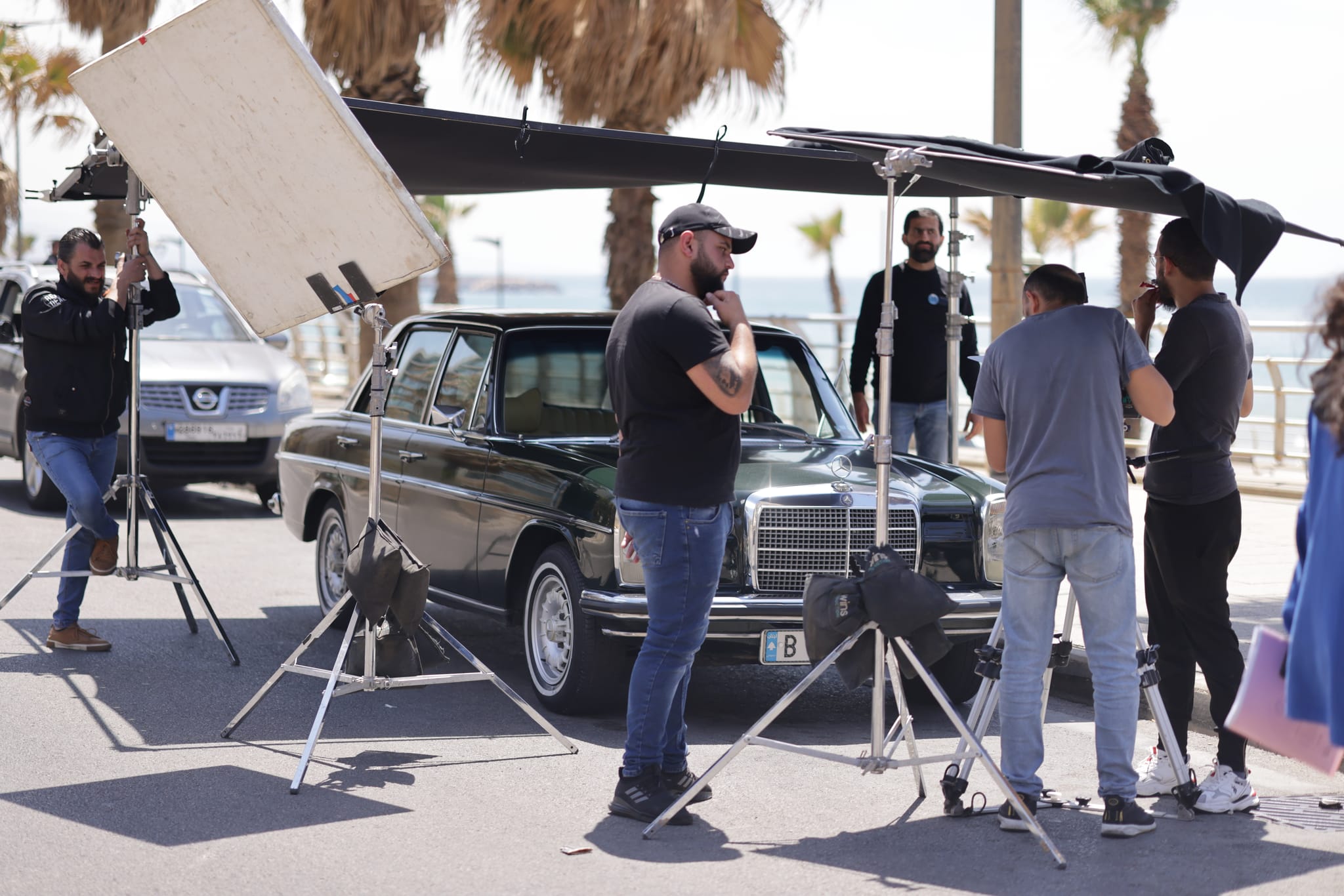
Every year, broadcasters, agencies, NGOs and brands from outside Lebanon need something filmed here: a documentary sequence, an interview with someone based in Beirut, a campaign scene on the coast, coverage of a conference. The ones that go smoothly have one thing in common. Somebody local was planning the shoot before the crew boarded the plane.
That local somebody goes by several names: fixer, line producer, production service company. We are Fine Line Production, a production house in Hamra, Beirut, working since 2017. Most of our filming happens across Lebanon, from the south to the north and from the coast into the mountains. If you are planning a shoot in Lebanon and need a production team on the ground, that is what we are here for.
Fixer, line producer, production house: who does what
The words overlap, so it helps to separate them.
- A fixer is a local person who opens doors: introductions, access, translation, and knowing who to call. Journalists and small documentary teams usually work with one.
- A line producer runs the practical side of a shoot: budget, schedule, crew, equipment and locations.
- A production house is a full team with its own crew, equipment and post-production, able to take on part of your production or all of it.
Which one you need depends on how much of your own crew is travelling. If your director and camera team are coming and you only need access and logistics, you need fixing and line producing. If you would rather send a brief than a crew, you need a production house. We do all three.
What a visiting crew needs in Lebanon
- Permission to film. See the permit section below. This is the item to start earliest.
- Local crew. Camera operators, sound, lighting, production assistants, and people who speak Arabic, English and often French.
- Equipment. Renting locally avoids flying cases through customs.
- Locations. Somebody has to find them, visit them and agree access with whoever owns or manages them.
- A place to work. A studio for interviews or product shots, and somewhere to back up footage each night.
- Post-production, if you want it. Editing, subtitles, grading or a rough cut before you fly home.
The filming permit: what the official source asks for
The Lebanese Army's Directorate of Orientation publishes the requirements for a filming permit for a commercial film, a category it defines as music videos, movies, documentaries and commercials. According to that page, the application includes:
- A written request stating the type of film, the location, the date, a contact phone number and the names of the crew members.
- The commercial circular of the company or institution making the request.
- The authorization of General Security for the production of the film.
- A copy of the script.
- Copies of the identity cards of Lebanese crew members, and for foreign crew members a copy of the passport and of the General Security visa received on entry to Lebanon.
The same page gives the processing time as at least one week after the application is presented when no military equipment is needed, and a minimum of three weeks when the film needs weapons, ammunition, military vehicles or equipment. It states that no fees are needed.
Filming from the air has its own request. The Directorate lists a separate permit for filming with a small aircraft (page in Arabic). It asks for the type and serial number of the drone and of the camera, a schedule of where and when it will fly, a licence from the Air Force to use the aircraft, and the identity papers of the operator, and gives the processing time as at least one week once every document is in.
Two practical points follow. First, the Army permit needs the General Security authorization, so the paperwork is a sequence, not a single form. Second, the crew list and the dates go into the application, so decide who is travelling and when before applying. The Directorate lists separate requests for media outlets and for freelance journalists, so a news crew follows a different route from a commercial production. Requirements change, so always check the current official page, or ask your local partner to, before you book flights.
What we do on the ground
- Permits. We prepare and submit the filming permit applications for the production.
- Locations. We scout locations and arrange access before the crew arrives.
- Logistics. We arrange local transport and accommodation for the visiting crew.
- Interpretation on set. Arabic, English and French, so nothing is lost between the crew and the people in front of the camera.
- Crew. Directing, cinematography and camera operation are in-house, with multi-camera setups when the job needs them. Our event setup typically runs four to five cameras at 6K.
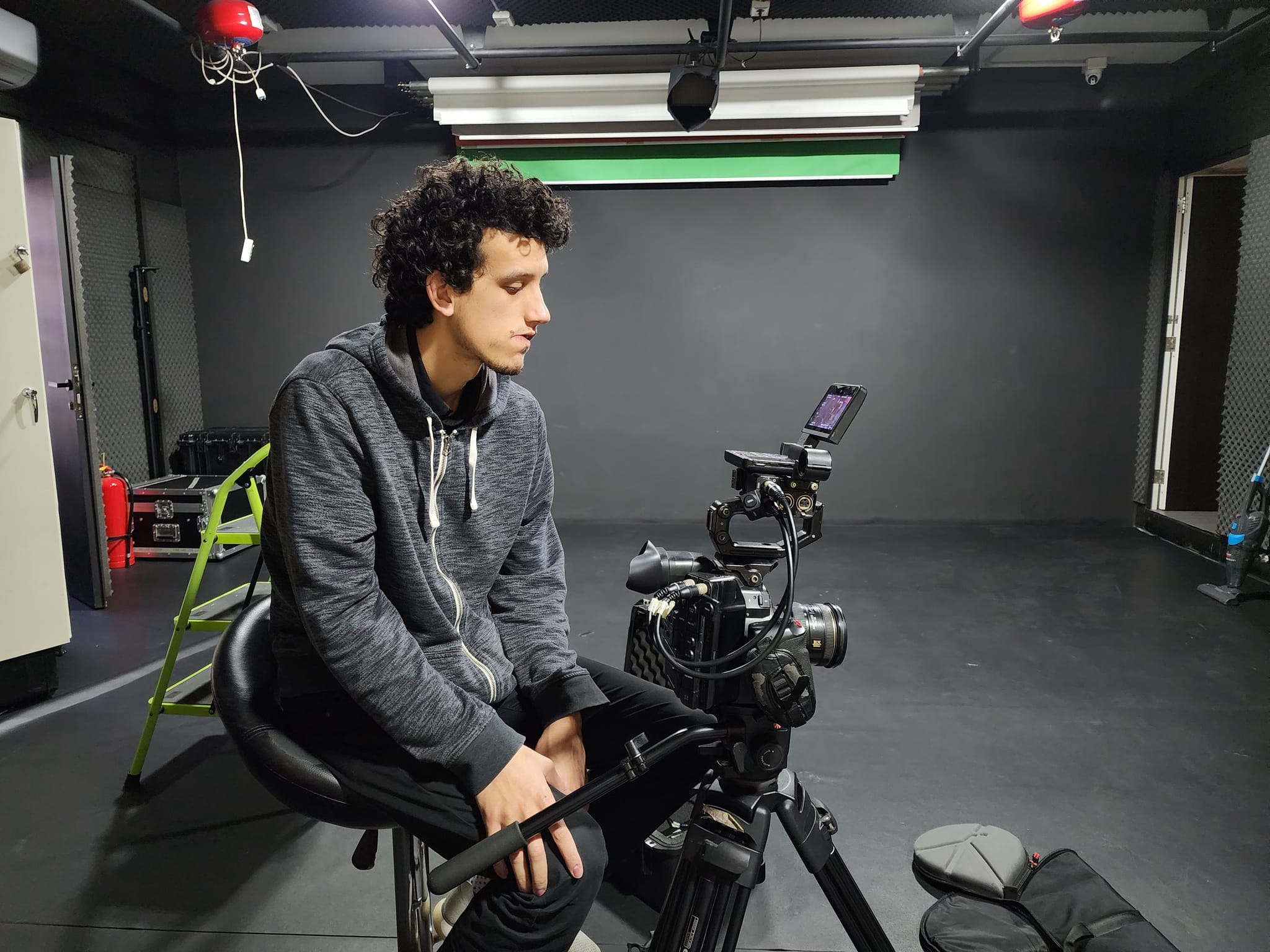
- Studio. Our own studio at 204 Matta Building, Makdessi Street, Hamra, with professional lighting and sound and a green screen, set up for both photography and video. It can be hired on its own, and crew, gear and post-production can be added from our team. See the studio.
- Aerial filming. Available when a project calls for it, through the drone operators we work with rather than an in-house department.
- Photography. Stills alongside the filming, as we did for Humanity & Inclusion's demining work.
- Language in the edit. We script and produce in Arabic and English, with multi-language voice-over production.
- Live streaming. Multi-camera streaming from venues and from field sites. See live streaming.
- Post-production in Beirut. Editing, animation, VFX tracking, compositing and color grading, so a rough cut or a finished master can be ready before or after you leave.
Who we have done this for
Teams from Vice News and Al Jazeera, among many others, have worked with us on the ground in Lebanon.
We know the ground because we film on it
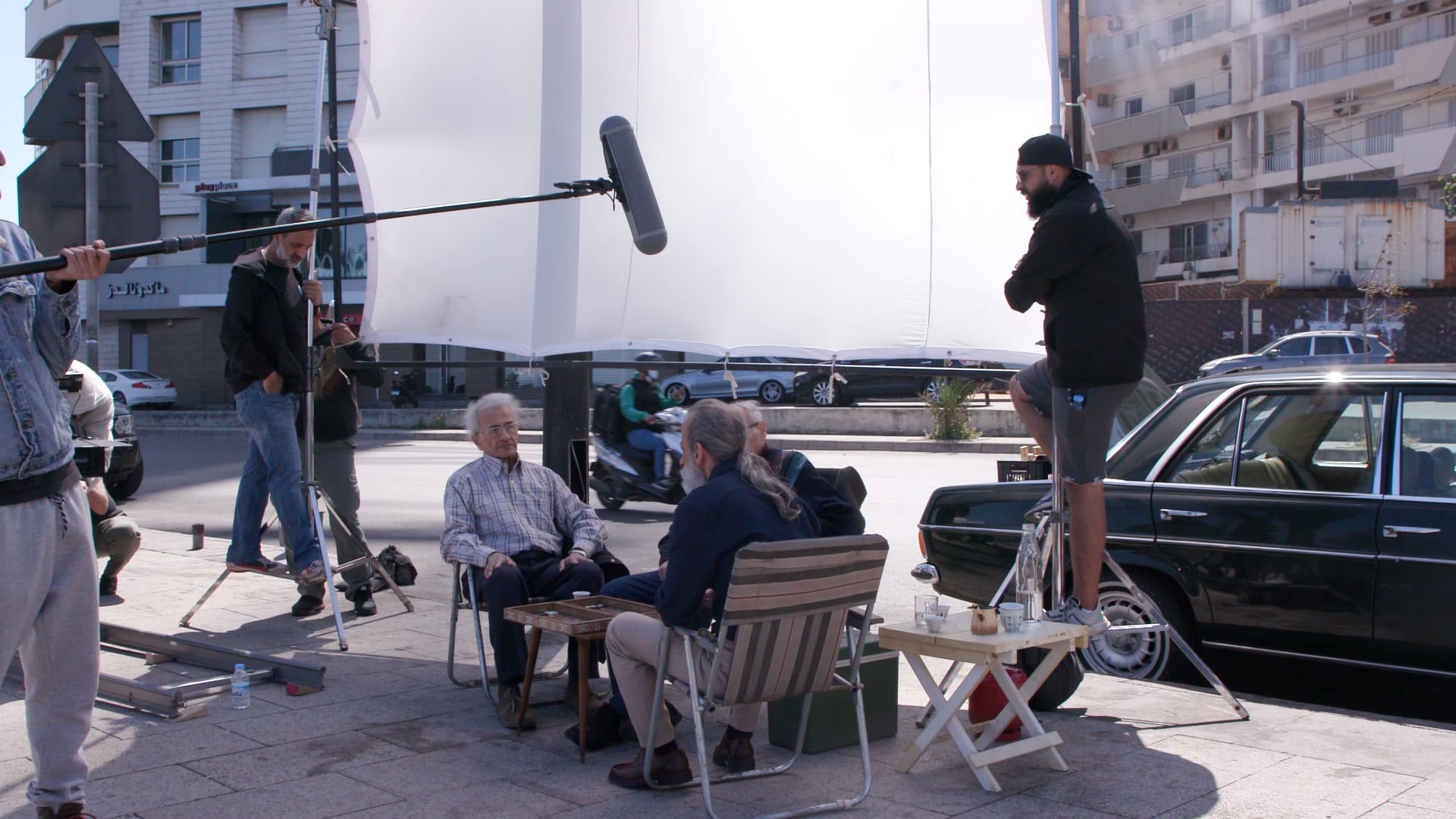
Documentary production is the work we are best known for. We film for UN agencies, international NGOs, embassies and foundations, usually on location across Lebanon and often in difficult conditions: demining teams in Mount Lebanon, choirs in Tripoli, families displaced by conflict. The humanitarian demining case study shows what filming on a controlled site involves, and how a documentary gets made in Lebanon walks through the full process.
Many of the organizations we work for are based outside Lebanon. We have covered a live event for the Peace Research Institute Oslo, and our client list includes Harvard University, Qatar University and UNICEF Jordan.
Sometimes nobody needs to fly
A shoot in Lebanon does not always need a visiting crew. For Les Vagues, Dar Global's residence in Qatar designed by Elie Saab, the residence was filmed in Qatar and the interviews with Elie Saab were recorded in Lebanon, then woven into one film. See Les Vagues by Elie Saab.
If your story has one part in Lebanon, a local team can film it to your brief while you review from wherever you are. Our guide to cross-border productions in MENA explains the three ways this works.
What to send us
A useful first message answers these:
- What you are making and who it is for.
- Dates and how many filming days in Lebanon.
- Where you want to film, as precisely as you know.
- Who is travelling and which roles you need locally.
- Equipment you are bringing and what you want to rent here.
- What you need afterwards: raw footage only, a rough cut, or a finished film.
Talk to us
Email info@finelineprod.com, call our landline on +961 1 741 744 or our mobile on +961 3 061 979 (also on WhatsApp), or use the contact page. The full list of what we do is on the services page.