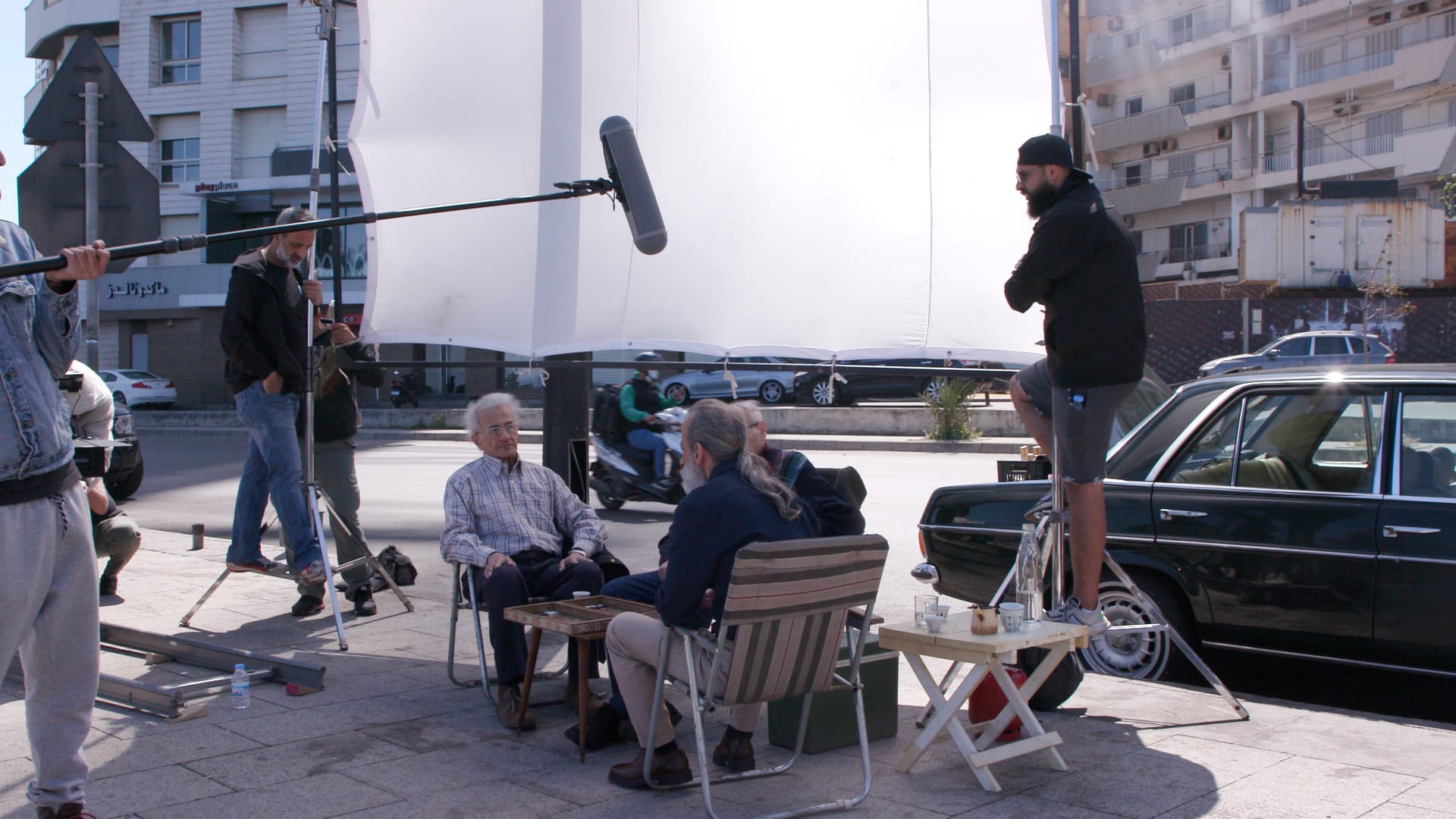
A film fixer in Lebanon is a local person who makes a visiting shoot possible on the ground: introductions to people, access to places, translation, transport and the daily phone calls that keep a schedule alive. A line producer plans and runs the shoot itself, with budget, crew and equipment. A production service company can supply both, plus the crew and the gear. Which one you need depends on how much of your own team is travelling.
The terms get mixed up, often by the people using them. This guide separates them, shows what each one is responsible for, and lists what to agree before anyone boards a plane. It is written from Beirut, by a production house that works with visiting crews. For the wider picture of visiting a shoot to Lebanon, see our guide to filming in Lebanon.
What does a film fixer do?
The word comes from news reporting, and the job has no single fixed description. The Committee to Protect Journalists, in its report The Fixers (2004), describes fixers as people who guide, translate and arrange interviews for foreign reporters, and notes that established fixers are generally local hires, many of them respected journalists in their own countries. It also notes that the word is sometimes stretched to cover drivers and travel guides.
A research study of the journalist-fixer relationship, by Shayna Plaut and Peter Klein, asked journalists and fixers what the work involves. Fixers who also work as journalists described it as suggesting and locating sources, securing interviews, taking care of travel and documents, and arranging other logistics (Plaut and Klein, Global Reporting Centre). Put simply, a fixer is the person who knows who to call, what to say, and in what order.
On a film or documentary shoot in Lebanon that usually breaks down into:
- People. Finding contributors, introducing you to them and explaining to them what the shoot is for.
- Places. Locations, and the conversations with whoever owns or manages them.
- Language. Interpretation between the crew and the people on camera.
- Movement. Getting people and equipment from one place to the next on time.
- Judgment. Telling you when a plan will not work on the ground, and what to do instead.
A fixer does not usually direct, shoot or edit. Those jobs stay with your own team, or with the production company you hire.
Fixer, line producer or production service company: what is the difference?
- Fixer. One local person who provides access, introductions, translation and local knowledge. Your own director, camera and sound people travel. Typical for journalists and small documentary teams.
- Line producer. Runs the practical side of the shoot: the budget, the schedule, hiring crew, booking equipment and locations. Useful when you have a creative team but nobody to manage the shoot day by day.
- Production service company. A company that supplies the local crew, equipment and studio as well as the logistics, and can take on part of the production or all of it. Useful when you would rather send a brief than a crew.
In practice the lines blur. A fixer may also produce. A production company may have a person who fixes. The useful question is not which word is on the invoice but which of the jobs above is covered, by whom, and who answers if it goes wrong.
The same research found that the two models sometimes meet in one person: about one in five of the journalist-fixers interviewed ran an in-country production company and could offer videography, editing and translation alongside fixing (Plaut and Klein).
Do I need a fixer to film in Lebanon?
We are not going to tell you that you must have one. What we can say is what the paperwork asks for, so you can decide who should handle it. The Lebanese Army's Directorate of Orientation publishes a filming permit request for commercial films and a separate one for media outlets and institutions. The media outlet request asks for a written request signed by the director, the company's commercial circular and identity or press documents for each crew member, gives a processing time of at least one week once the file is complete, and states that no fees are needed (Directorate of Orientation).
Commercial films (music videos, movies, documentaries and commercials) go through a separate permit request, and requirements change, so check the current official pages or ask your local partner to. The full breakdown, including drone filming, is in the permit section of our filming in Lebanon guide, and the separate drone request is covered in drone filming in Lebanon. Whether a fixer, a line producer or a production company submits the application, someone local needs to own it and own the dates.
How do I choose between a fixer and a production company?
Start with who is travelling.
- Your director and camera team are coming and the story is already defined. A fixer, possibly with a line producer, may be all you need.
- Your team is coming but you need crew, equipment, transport and a studio on top. A production service company covers more of that in one contract.
- Nobody on your side can travel. Send a brief to a production house that can film to it. For one example, the interviews in Les Vagues by Elie Saab were recorded in Lebanon and woven into footage of the residence filmed in Qatar.
- The shoot is long, sensitive or technically involved. Documentaries on controlled sites, such as demining, need more than introductions. See the humanitarian demining case study.
How most fixers are found is worth knowing. In the same survey, 92 percent of respondents cited word of mouth as the main way they hire (Plaut and Klein). Ask colleagues who have filmed in Lebanon recently, and ask any candidate for references you can call.
What should I agree with a fixer before the shoot?
Misunderstandings between visiting crews and local fixers usually start with things that were never said out loud. Settle these in writing before the first day:
- Scope. Exactly which jobs are covered: access, translation, driving, permits, payments.
- Pay. The rate, the days it covers, and when it is paid. Settle this before pre-production starts. A survey of journalists and fixers found day rates for fixers worldwide ranging from $50 to $400, a global range across many countries, not a Lebanese rate (Klein and Plaut, Nieman Reports, 2017).
- Credit. Whether the fixer is named in the finished film. The survey found 60 percent of journalists said fixers never or rarely get credit, while 86 percent of fixers said they would like credit always or sometimes. Whether to be named should be the fixer's choice, so ask rather than assume.
- Safety. Who decides when to stop or leave a location, who has the final say, and what happens to the local team after your crew goes home. The CPJ report records a Pakistani fixer for two French reporters who was detained for more than three months. Agree in advance how risks are shared with your local team.
- Ownership of material. Who may use the footage, the contacts and the research, and for what.
Before you travel, also read your own government's current travel advice for Lebanon and your insurer's terms. Both change, so we do not summarize them here.
What does Fine Line do for visiting crews?
We are Fine Line Production, a production house in Hamra, Beirut, working since 2017. We do not sell a job called fixer. We act as the local production partner for visiting crews: filming permits, location scouting, transport and accommodation, interpretation on set in Arabic, English and French, local crew, our own studio and post-production in Beirut. Teams from Vice News and Al Jazeera, among many others, have worked with us.
That means we can cover the fixing, the line producing and the crew in one contract, or only the part you need. If your own team is travelling, we can work as the local side of it. If you would rather send a brief, we film to it. There is no published rate card, because the price depends on the shoot days, crew, locations and deliverables, and we quote after a short brief. Our guides to choosing a production company and what a production house does go through the questions to ask, and the production company checklist turns them into a list.
If your project is a documentary, how a documentary gets made in Lebanon and documentary production in Lebanon explain the stages, and shooting for the Gulf from Beirut covers cross-border work. Our full list of services is on the services page, and our documentary work is on the documentaries page.
What to send before you hire anyone
- What you are making and who it is for.
- Dates and how many filming days in Lebanon.
- Who is travelling and which jobs you need covered locally.
- Where you want to film, as precisely as you know.
- What you need afterwards: raw footage, a rough cut or a finished film.
Send that to info@finelineprod.com or use the contact page, and we will tell you what the shoot needs and which parts you can keep in your own hands.