
You have a video to make and a shortlist to build. Type "video production company Lebanon" into Google and the first page is mostly directories, each ranking dozens of names by criteria you cannot see. The names range from one-person videographers to advertising agencies to full production houses, and from the outside they all promise the same thing. This guide is how to tell them apart.
We are Fine Line Production, a production house in Hamra, Beirut, working since 2017. We are obviously one of the companies you might be comparing, so we have tried to write the checklist we would want a client to use on us. Every point below is something you can verify before you spend anything.
The stakes are not small. In Wyzowl's 2026 video marketing survey of 266 marketing professionals and consumers, 89% of consumers said video quality affects their trust in a brand, and 63% said a short video is how they would most like to learn about a product or service. A weak film does not just waste its budget. It costs trust.
Start with what you need, not who is available
The right company depends on the job. A 30 second TV commercial, a 20 minute documentary for a donor, an animated explainer and a streamed conference are four different crafts, and some companies do one of them superbly. Before you look at anyone's reel, write down three things: what the film must achieve, who will watch it and where, and roughly when you need it. Our guide on what a production house actually does explains the difference between an agency, a production house and a freelancer, which is the first fork in the road.
Then decide how much of the chain you need. If you already have a strategy, a script and a storyboard, you need excellent execution. If you have only a goal, you need a team that can carry concept, script, shoot and post-production together. Those are different shortlists.
Read the portfolio like a producer
Every company's showreel is its best 90 seconds. Look past it:
- Find the full films, not the cuts. A reel hides pacing, sound and structure. Ask for two or three complete films close to what you need, and watch them to the end.
- Check the credit. Did the company direct and produce the film, shoot one day of it, or only edit it? Honest companies say which. Our own film pages name the client, the year and the role we played, and when the strategy came from an agency, as it did for the ROCK Mutual Insurance launch, the page says so.
- Look for your conditions. If your film will be shot in a field clinic or a factory, a portfolio of studio commercials tells you little. Look for work made in conditions like yours: on location, in your sector, in your language.
- Look for range inside one project. A launch that needed a corporate film, product spots, an internal campaign and photography shows whether one team can hold a whole brief.

Ask who will actually do the work
In the same Wyzowl survey, 59% of businesses said they now create video in-house, 32% mix in-house and external teams, and 10% rely only on outside vendors. On the supplier side the picture is just as mixed: a company that presents as a production house may be a producer who subcontracts the director, the crew, the editor and the animator per project. That is not wrong, but you should know it, because every handover between suppliers is a place where the brief can leak and the price can grow.
Ask directly: who directs, who shoots, who edits, who animates, who grades, and are they on your team or hired per job? At Fine Line the core team is five people backed by more than thirty regular freelancers, and the idea, the script, the shoot, the animation, the grade and the delivery happen under one roof with one point of contact. When we use outside specialists, for instance the drone operators we work with, we say so rather than calling it an in-house department.
Ask how the process works
A serious company can describe its process in a minute, because it runs it every week. Ours has three stages: pre-production (research, concept, script, storyboard), production (filming, directing, cinematography) and post-production (editing, sound design, color grading, delivery), with the client in the loop at each stage rather than only at the end. The details matter less than the fact that there is a process at all, with approval points you can see in advance. Our article on how a video gets made in Lebanon walks through each stage.
Two follow-up questions reveal a lot. How many rounds of revisions are included, and at which stage? And what happens if the shoot date moves? Clear answers here are the difference between a quote and a surprise.
Check the things that are easy to skip
- Languages. If your audience is in Lebanon or the region, you probably need Arabic and English, sometimes a specific dialect. Ask whether the company scripts and produces in both, or translates afterwards.
- Accessibility. Subtitles and sign language interpretation are easiest when planned from the start. We build sign language integration into productions, with interpreters covering Lebanese, Jordanian and Palestinian sign languages.
- Photography. Many projects need stills as well as film. A team that shoots both on the same day saves a second booking.
- Rights and files. Who owns the footage, and will you receive the master files and the social cuts? Get it in writing.
- Working across borders. If the shoot is outside Lebanon, ask for examples. We have produced in Dubai and Qatar for Dar Global, including the Davinci Tower by Pagani film.
Experience with organizations like yours
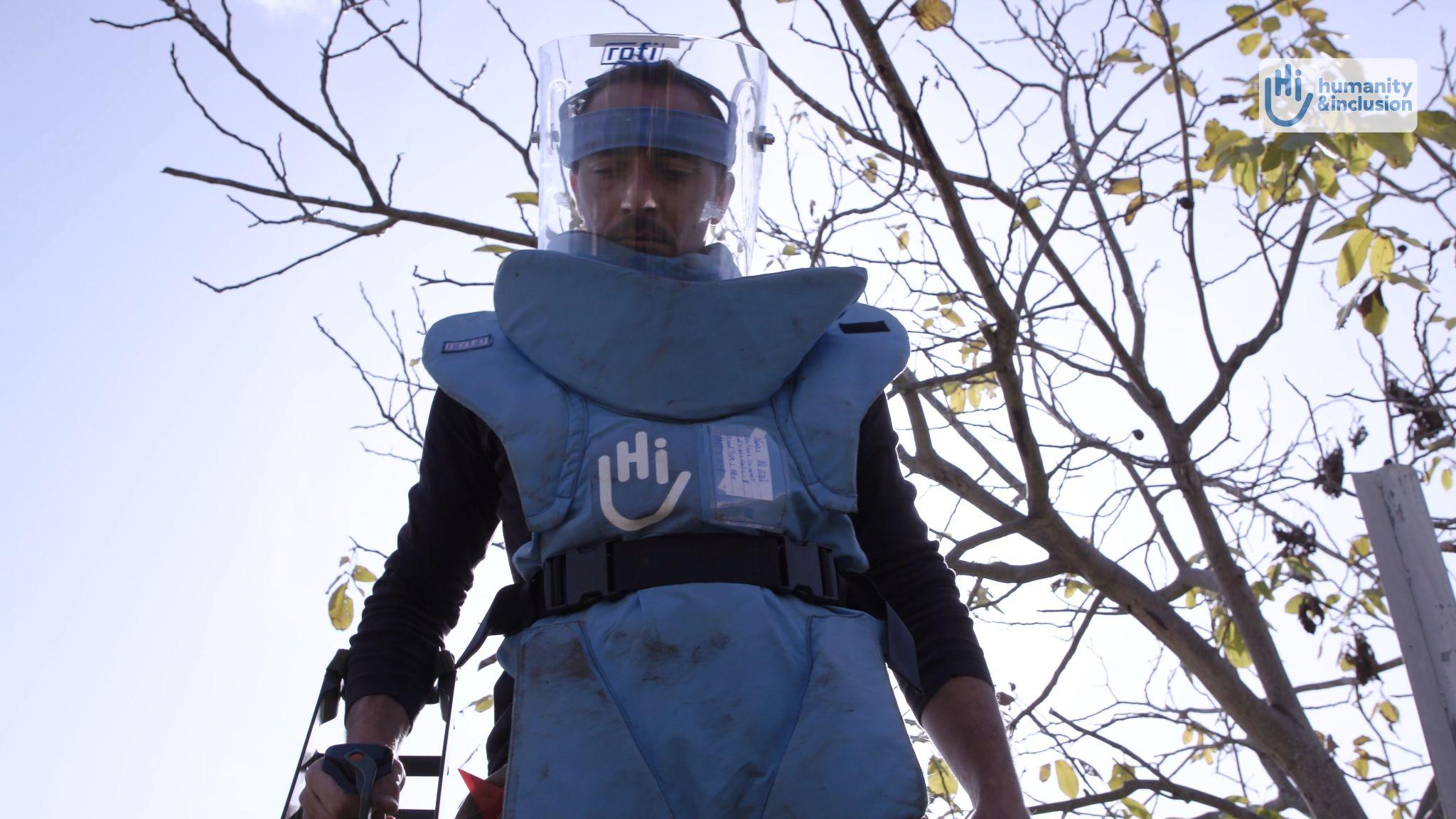
Clients in the public and non-profit sector have specific needs: procurement paperwork, consent and safeguarding rules when filming children or vulnerable people, donor visibility guidelines, and sometimes difficult locations. A company that has done this before will ask you about these things before you ask them. Of the more than 85 organizations we have worked with, 21 are public sector and 35 are non-profits, including UN agencies and international NGOs, and seven are on long-term agreements. That history is how our demining documentary for Humanity & Inclusion came to be filmed beside working demining teams in Mount Lebanon. Whatever your sector, look for evidence of it in the company's past work.
How to read the quotes
Collect two or three quotes, and make sure they describe the same film. The cheapest number often gets there by leaving things out: fewer shoot days, no sound recordist, one revision round, no social versions. A fair quote lists crew, equipment, shoot days, post-production, music licensing, deliverables and revisions as separate lines, so you can compare like with like. If a quote is one number on one line, ask for the breakdown. Our corporate video cost guide explains what each line usually means and what moves it.
Be careful with two extremes. A price far below the others usually means a smaller crew or a shorter edit than you imagined. And a production company that offers to handle your media planning and buying is selling agency work it does not do in-house; we do not do it either, and we say so.
Warning signs
- The reel is impressive but nobody can show you a complete film.
- The company cannot name who will direct and shoot your project.
- There is no written process, no approval points and no revision policy.
- Every past project is another company's work "in collaboration".
- Everything is claimed as in-house, including drones, studios and interpreters, but there is no studio you can visit and no crew you can meet.
- Pressure to sign before you have seen a line-item quote.
A short checklist for the first call
- Three complete films close to our brief.
- Who directs, shoots, edits and animates, and whether they are in-house.
- The process and its approval points.
- Revisions included, per stage.
- Languages and accessibility handled from the script stage.
- A line-item quote with deliverables, rights and timeline.
- Two past clients we can call.
Talk to us
If Fine Line is on your shortlist, put every question above to us. Email info@finelineprod.com, call +961 1 741 744, or use the contact page. Our full films, with clients and years, are on the work page, and the services page lists what we do and what we do not.