Most people see a finished video and the day of filming, and almost nothing in between. So when organizations commission their first video, the process can feel like a black box: money goes in, a film comes out, and it is not clear what happens in the middle or why it takes as long as it does.
This article opens the box. We are Fine Line Production, a video production house in Beirut working since 2017, and this is the process we run on every project, from a 20 second commercial to a field documentary. If you know these three phases, you can work with any production company and understand exactly where your project is at any moment.
Video is worth this attention because it works. In Wyzowl's Video Marketing Statistics 2026, an industry survey running since 2015, 96% of people say they have watched an explainer video to learn about a product or service, 85% say a video has convinced them to buy, and 84% of consumers say they want to see more videos from brands. The videos behind those numbers all went through the same three phases you are about to read.
Phase 1: Pre-production, where the film is actually decided
Pre-production is everything before the camera rolls: research, concept development, scriptwriting, storyboarding, casting, locations and the shooting schedule. It is the least visible phase and the most important one, because this is where the film is designed. A shoot executes decisions; pre-production makes them.
A real example of what a concept decision looks like: when Embrace and Lebanon's Ministry of Public Health needed a broadcast spot about the signs of depression, the pre-production answer was to place the message inside an ordinary family game show moment in a Lebanese living room, so the subject would feel everyday rather than clinical. That choice, made on paper before any filming, is the entire film. You can see the result in the Step by Step TVC.
This is also the phase where practical Lebanon questions get settled: which locations need permissions, what the electricity situation means for equipment, which days the schedule can realistically hold. A production company that plans these in pre-production delivers on time. One that discovers them on the shoot day does not.
Phase 2: Production, the shoot itself
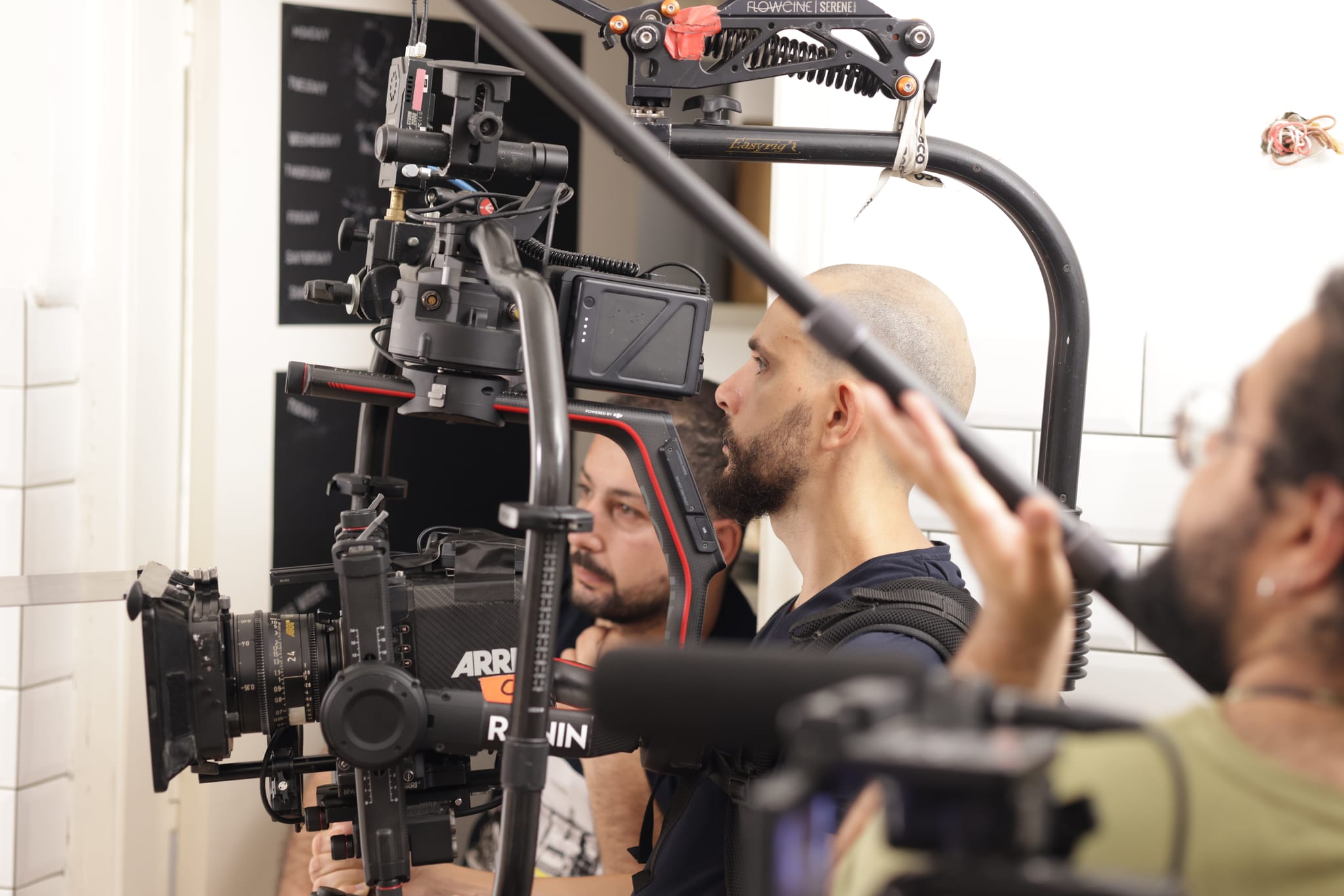
Production is the filming: a director, a cinematographer, sound, lighting and the rest of the crew capturing everything the edit will need. The crew size follows the ambition of the images, not the length of the film, which is why a 30 second commercial can have a bigger crew than a 10 minute documentary.
What a shoot day actually looks like depends on what is being filmed. On a brand shoot it is lighting setups, takes and resets. On location work it can mean something else entirely: when we documented demining teams in Mount Lebanon for Humanity & Inclusion, filming meant working at the pace the clearance work is actually done, because the work is slow by design and the film had to treat that process as the subject.
One practical habit worth copying from that project: the photography was shot alongside the filming, and delivered to stand on its own. Capturing stills during the same shoot days is usually the better argument than booking photography separately, and it is how we run most projects.
Phase 3: Post-production, where the film gets made twice
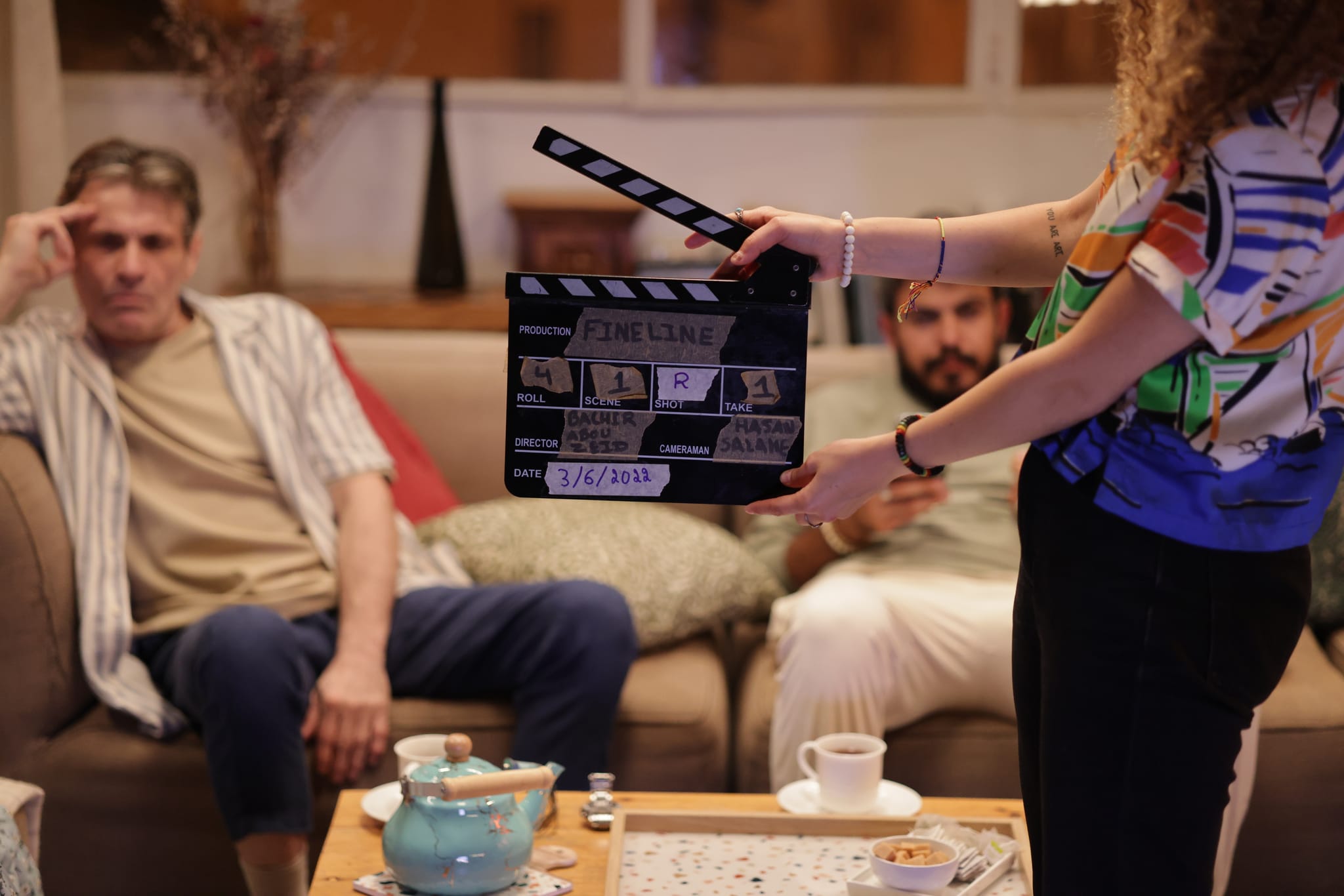
Post-production is editing, sound design, music, color grading, motion graphics, subtitles and delivery. Editors like to say a film is made twice, once on set and once in the edit, and it is true: the same footage can become several different films depending on the cut.
Post is also where animation lives. Some projects mix filmed footage with animated sections; some are animation from the first frame. When UNICEF needed to explain its water support for the isolated Rukban settlement, filming on location was unsuitable, so the whole story was produced as animation in Beirut, built around a young narrator's point of view.
And post can be a project in itself. The Coco Pops Arabia commercial for Kellogg's came to us as live action that needed a full post pipeline, edit, character animation, VFX tracking, compositing and color grading, all handled by the Beirut team so the animated world and the real performers read as one continuous piece.
Delivery: the master is not the end
The finished film is delivered in every format the plan calls for, and today that plan is rarely one file. Most projects also need vertical versions for Instagram and TikTok, shorter cutdowns and stills. The important thing is deciding this before the shoot, because a crew that knows a vertical version is coming frames the shots for it. We covered the budget side of this in what drives the cost of a corporate video in Lebanon.
How long does all this take?
Honestly: it depends on the film, and any company quoting a universal timeline before hearing your brief is guessing. What we can say is where time goes: concept and script take thinking time, shoot days are usually few, and post-production expands with animation, languages and the number of deliverables. Deadlines are exactly the kind of thing pre-production exists to plan around, so share yours in the first conversation.
Getting a project started
The fastest way from idea to schedule is a short brief: who the video is for, what it should achieve, where it will play, roughly how long, when you need it, and your budget range. Send that to a production company and phase 1 can start immediately. The full range of what we produce is on our services page. Email info@finelineprod.com, call +961 1 741 744, or use the contact page.