Ask three studios to quote the same animated video and the numbers can land far apart. That is not trickery. It is because "an animation" can mean a 40 second motion-graphics explainer built from your brand assets, or two minutes of hand-drawn characters designed from a blank page. The word is the same. The work is not.
We are Fine Line Production, and animation is one of the things we design and animate in-house in Beirut: 2D, hand-drawn, motion graphics and, increasingly, AI-assisted work, delivered in Arabic and English. We do not publish a price list, and this article will not invent one. Instead it shows you what actually moves an animation budget, so you can read any quote and understand what you are paying for.
Businesses clearly believe this format earns its keep. In Wyzowl's 2026 video marketing survey, 91% of businesses said they use video as a marketing tool, 96% of people said they have watched an explainer video to learn about a product or service, and animated videos made up 23% of the video content businesses created. The demand is real. The question is what the work behind it costs.
The short answer
There is no fixed price for animation in Lebanon, because the price is built from the parts: how long the film is, which style it uses, how much original design it needs, how many languages it speaks, and how many rounds of changes it goes through. A minute of animation can be light work or heavy work depending entirely on those choices.
The useful news: every one of those parts is a decision you get to make, and a good studio will tell you which ones matter for your story before you spend anything.
What actually moves the price
1. Length, but less than you think
Animation is priced closer to "per second of finished film" than any other format, because every second is built rather than filmed. But length is not the biggest driver. A simple 90 second piece can cost less than a rich 40 second one. What fills the seconds matters more than how many there are.
2. Style: motion graphics, hand-drawn, 3D, AI-assisted
Motion graphics built from text, icons and your existing brand elements is the leanest style. Hand-drawn or character animation costs more, because characters have to be designed, posed and moved frame by frame. 3D adds modelling and rendering time on top. None of these is "better", they fit different stories: a process explainer usually wants motion graphics, an emotional story usually wants characters.
And there is a fourth option now: AI-assisted animation. We use generative tools as part of the pipeline where they genuinely help, for building visual worlds, moods and sequences that would be slow or impossible to draw by hand, always with our designers directing and finishing the work. For the right story it can put imagery on screen that a traditional budget never could. It is a style choice like the others, not a shortcut around the craft: the script, the storyboard and the judgment stay human. You can see what this looks like in practice on our AI samples page, and our article on how we use AI in video production explains where we draw the line.
3. How much has to be designed from zero
If your organization has a brand book, illustrations or an existing visual world, the design stage starts warm. If everything must be invented, backgrounds, characters, color scripts, icon sets, that is real design work before a single frame moves. This is often the hidden difference between two quotes for the "same" video.
4. Script and storyboard
Every animation we make starts with a script and a storyboard, because in animation, changes on paper are cheap and changes after animation are expensive. A clear brief shortens this stage. A vague one lengthens it. Either way it is genuine work: the storyboard is where the film is actually designed.
5. Voice-over and languages
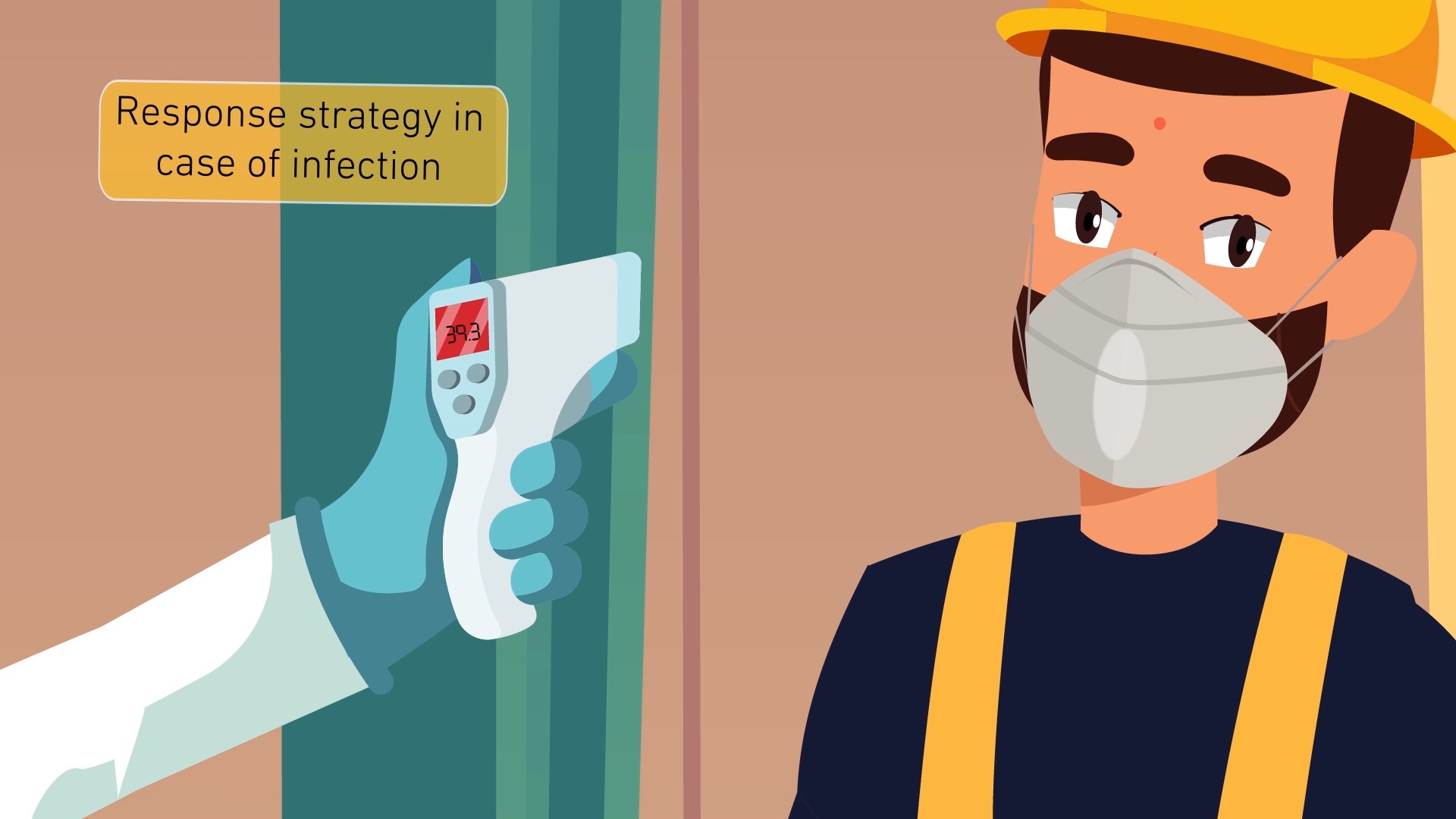
A professional voice recording is its own line: casting, recording, direction. Each extra language multiplies parts of the pipeline, the script adaptation, the recording, and often the animation timing itself, because Arabic and English sentences do not have the same length. We script and produce in both, and we have delivered fully bilingual work, including a COVID-19 awareness animation for UNIDO made in Arabic and English. Bilingual is normal for us, it just has to be in the plan.
6. Revisions
Animation has a strict order: script, then storyboard and design, then animation, then sound. Changes made in the right stage are cheap. Changing the script after the animation stage means rebuilding finished work. Most studios, including us, structure quotes around a set number of revision rounds per stage. Tight feedback from your side is the single easiest way to protect your budget.
7. Deliverables
The master film is rarely the end. Square and vertical versions for social, cutdowns, subtitled versions, and stills each add edit time. Planning them from the start is cheaper than requesting them after delivery, because the design can be framed for every format at once.
When animation is the right tool, not the expensive one
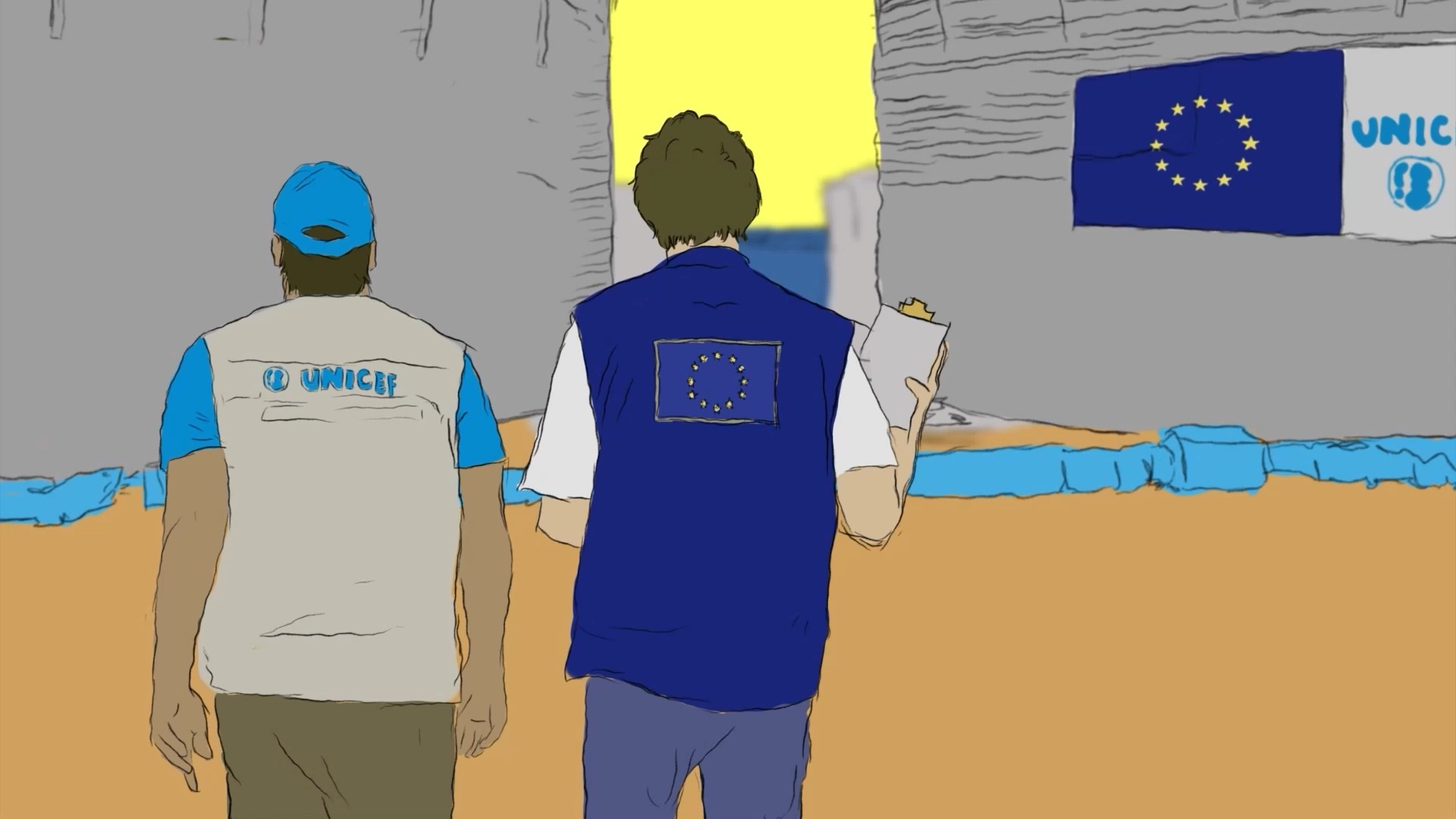
Animation earns its budget in situations where filming struggles: invisible processes, sensitive subjects, places a camera cannot go. When UNICEF needed to explain its water and hygiene support for the isolated Rukban settlement near the Syria-Jordan border, on-location filming was unsuitable, so we produced the story as a two minute animation in Beirut, told through a young narrator's point of view, covering the safe-water system that serves roughly 7,500 residents with ECHO support. No shoot, no travel, no crew days: the entire budget went into the storytelling. You can see that film and more of this kind of work, awareness films and explainers for UN agencies, NGOs and brands, on our animations page.
Why in-house animation changes the quote
Some animation quotes are high because they contain other companies' margins: an agency writes the script, a freelancer designs, another studio animates, a fourth mixes the sound. Every handover adds cost and risk.
At Fine Line, script, storyboard, design, voice-over and final animation happen in-house, in one building in Beirut, with one point of contact. Nothing is marked up twice and nothing is lost between suppliers. It also means a filmed project can carry animated sections without hiring a second company, which is how a lot of corporate videos get their explainer moments.
How to get an accurate animation quote quickly
Send any studio these six answers and you will get a real number instead of a guess:
- What should the film explain or achieve? One sentence is enough.
- Who is it for? Clients, donors, staff, the public.
- Where will it play? Website, social media, an event screen, TV.
- How long, roughly, and in which languages?
- Does a visual identity already exist, or should we design the world from zero?
- When is it needed, and what is the budget range? A rough band tells us which honest approach fits your reality before anyone designs the wrong film.
Keeping the budget down without cheapening the film
- Choose the style that fits the story, not the most elaborate one.
- Lock the script before design, and the storyboard before animation.
- Reuse your existing brand world where it genuinely fits.
- Plan every language and format version from day one.
- Keep one decision-maker in the feedback loop on your side.
Talk to us
If you are planning an animated video in Lebanon, send us the six answers above and we will come back with a clear, honest quote. Email info@finelineprod.com, call +961 1 741 744, or use the contact page. Recent animation work is on the animations page, and if your project mixes filming with animation, our corporate video cost guide covers the filmed side of the budget.