Most film genres are allowed to fail quietly. A weak commercial sells less. A weak humanitarian film does damage: it can expose a child to risk, reduce a person to their worst moment, or waste the trust of a community that let a camera in. So this kind of filmmaking runs on rules the audience never sees.
We are Fine Line Production in Beirut. Documentary and impact films for UN agencies, international NGOs, embassies and foundations are the work we are best known for: of the 85 organizations we have worked with since 2017, twenty-one are public sector and thirty-five are non-profits, and 7 clients work with us on long-term agreements. This article explains how these films get made, and why they are made the way they are.
Why these films exist at all
Humanitarian organizations film because the situations they work on are invisible to the people funding the response. The scale is hard to hold in your head. The joint ILO and UNICEF global estimates count nearly 138 million children in child labor worldwide in 2024. The ICBL's Landmine Monitor 2025 recorded 6,279 people killed or injured by landmines and explosive remnants of war in 2024, the highest total since 2020, with civilians making up 90% of casualties and almost half of them children. Here in Lebanon, UNHCR works to protect 1.5 million refugees, and reports that nine out of ten refugee households in the country live in extreme poverty.
Numbers at that scale stop meaning anything on their own. A film's job is to return them to human size: one deminer, one classroom, one family. And with funding under real pressure, UNHCR Lebanon reports only 26 per cent of its financial requirements funded, the films making the case for this work carry real weight.
The rules come before the camera
Serious organizations hold their filmmakers to written ethical standards. UNICEF publishes ethical reporting guidelines for anyone representing children: the dignity and rights of every child respected in every circumstance, permission obtained from both the child and a guardian in the child's own language, no staging of anything that is not part of the child's real story, and no publishing an image that might put a child at risk even when identities are changed or obscured. Dóchas, the Irish network of development NGOs, publishes a guide to ethical communications in the same spirit, and researchers such as Lilie Chouliaraki, in her book The Ironic Spectator, have spent years examining how media about distant suffering shapes the way audiences respond to it.
For a production company this is not paperwork to file. It changes how films are designed from the first conversation. When Save the Children needed to document child labor in Tripoli and Akkar, the brief itself required communicating the conditions of work without identifiable portraits or sensational images. Our answer was formal: a black-and-white social-documentary language that films the work and the places in close detail while withholding faces, with ambient sound carrying the environment. The film says everything about the conditions and exposes no child. You can see the approach in Child Labour.
Filming reality at the speed reality moves
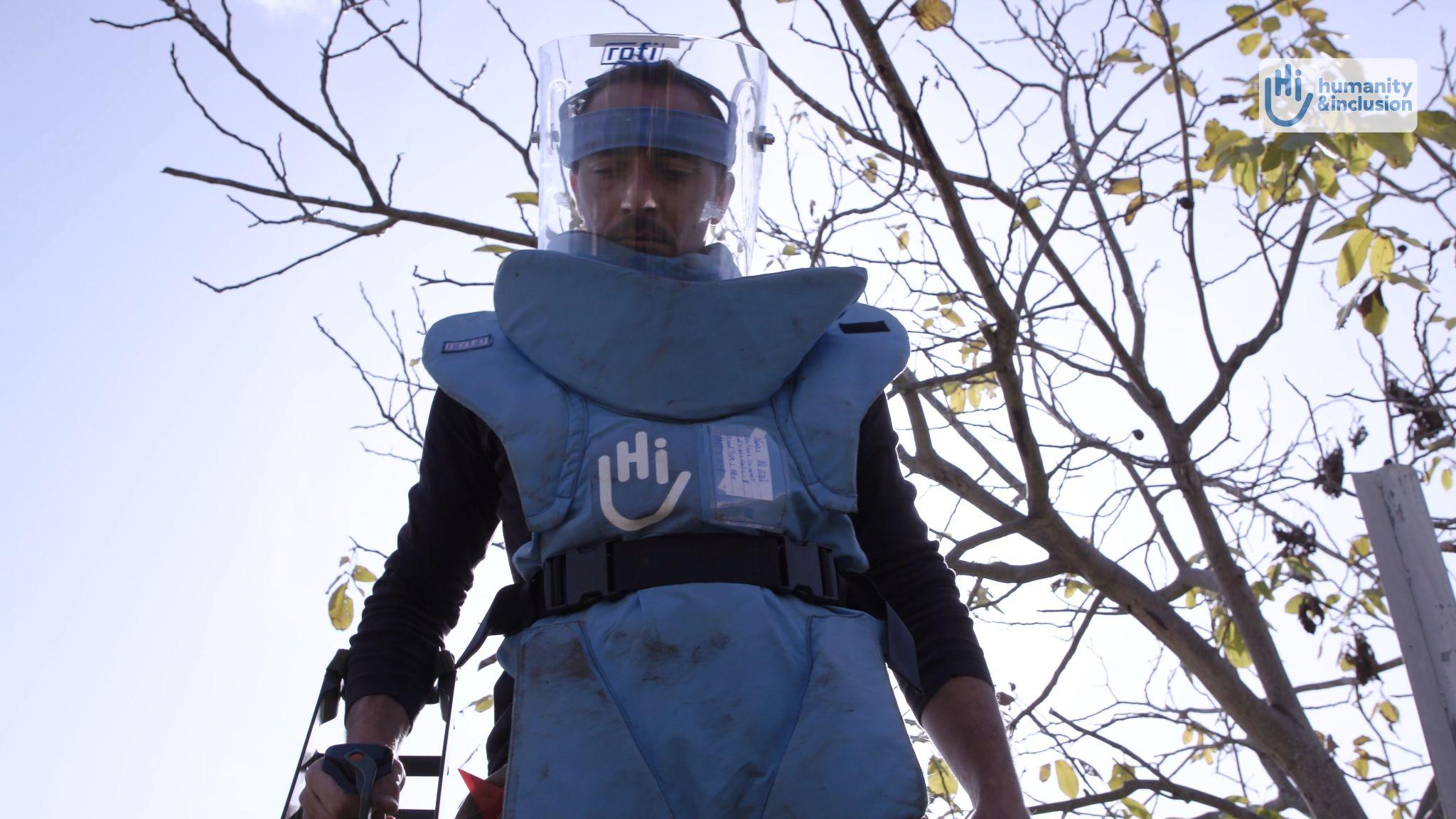
Humanitarian work is often methodical, repetitive and slow, and honest filming respects that instead of dramatizing it. When Humanity & Inclusion commissioned a record of its demining work in Mount Lebanon, the difficulty was that demining is slow by design, because the alternative to slow is fatal, and the danger is invisible in every frame you can safely shoot. We filmed the clearance procedure at the pace it is actually done, interviewed the Lebanese Mine Action Centre to place the work inside the national program, and recorded testimony from people injured by mines, because without the survivors the reason the procedure exists never appears on screen. The result is Humanitarian Demining.
That project also shows what NGOs should ask for beyond the film: we delivered technical infographics explaining the clearance process and a professional photography series shot alongside the filming, so the client had material for reports and print as well as screens.
When filming is the wrong tool
Sometimes the story cannot be filmed: access is impossible, or pointing a camera at the people involved would be wrong. Animation solves both. When UNICEF needed to explain its water and hygiene support for the isolated Rukban settlement, on-location filming was unsuitable, so we produced the story entirely as animation in Beirut, told through a young narrator's point of view. Animation kept the settlement legible and the people out of harm's way.
What it takes to do this in MENA
Working here means filming across Lebanon and often in difficult conditions, in the languages people actually speak. We script and produce in Arabic and English, subtitle in both directions, and offer sign language integration with interpreters. It also means production discipline: field schedules that respect the host organization's access rules, crews briefed on consent before anyone unpacks a camera, and edits reviewed against the same ethical standards the shoot followed. The full picture of this work is on our documentaries and impact videos pages.
If you are commissioning one
Three questions to settle with any production company before the shoot: how consent will be obtained and documented, in what language, and by whom; what happens when someone should not be identifiable, and what the visual plan is for that; and which deliverables the project needs beyond the film, because photography, infographics and cutdown versions are far cheaper captured with the shoot than after it. Email info@finelineprod.com, call +961 1 741 744, or use the contact page.