A good NGO video brief answers ten questions before anyone picks up a camera: why the film exists, who it is for, who appears in it and how they agree to it, where it is shot, in which languages, what exactly is delivered, who owns and may use it, when it is due, and how bids will be judged. This NGO video brief template for Lebanon sets out each one in plain language, so a communications officer can copy the headings and write a brief a production company can actually price.
We are Fine Line Production in Beirut. Of the 85+ organizations we have served since 2017, twenty-one are public sector and thirty-five are non-profits. The briefs that went best had one thing in common: they said what the film must achieve and what it must never do. This article is the commissioner's side of our guide to how humanitarian films get made, which explains the filmmaker's side.
What should an NGO video brief template include?
Use these ten headings as the skeleton of your terms of reference. Each is expanded below where it needs more than a line.
- 1. Background and purpose. The program, the problem and the decision the film supports.
- 2. Audience and channels. Donors, partners, communities or the public, and where the film will play.
- 3. The one outcome. What a viewer should understand, feel or do afterwards.
- 4. Contributors, consent and safeguarding. Who appears, how they agree, and how anyone at risk is protected.
- 5. Locations and access. Where filming happens and who arranges permission.
- 6. Languages and accessibility. Spoken languages, subtitles, sign language, captions.
- 7. Deliverables and versions. The master film, cutdowns, stills, graphics.
- 8. Rights, usage period and AI. Who owns what, for how long, and what AI may touch.
- 9. Timeline and approvals. Fixed dates, who signs off and how many review rounds.
- 10. Budget range and selection criteria. A stated range, and how bids will be compared.
How do you write the purpose and audience so bids come back comparable?
The most common weakness in a brief is a purpose like "raise awareness". It gives a production company nothing to design against, so every bid answers a different question and the prices cannot be compared. Name the audience, name the decision, and keep it to one outcome. A film for a donor review needs a different length, tone and structure from a film for a village meeting.
The MMKN documentary shows why length follows purpose. MMKN, a Lebanese non-profit working to transform education for public school students, was turning fifteen, and an organization that works that slowly cannot be summarized in ninety seconds without turning into a brochure. The film runs 13 minutes 22 seconds and was produced alongside a shorter companion video for the organization's Yidan Prize application, so one body of material had to serve a long supporter film and a tight award case. That is a brief decision, and it is cheapest when it is made on day one.
What should an NGO video brief say about consent and safeguarding?
This is the heading that separates an NGO brief from a corporate one, and the standards for it are published. Put the standard you follow in the brief by name, so every bidder prices the same obligations.
- Bond (the UK network for organizations working in international development). Its Putting the people in the pictures first guidelines, updated in November 2024, call informed consent the cornerstone of ethical practice and say it is a process, not just a signed form. Contributors should understand why they are being filmed, what the resulting communications will be, and how and where they will be shown. Bond also says an expiry on consent should be set and shared, and that contributors can withdraw consent for further use. A risk assessment for contributors should happen in the planning phase, as part of developing the terms of reference.
- UNICEF. Its ethical reporting guidelines ask for permission from the child and a guardian, in writing where appropriate, in the child's own language and without pressure on either of them. They say not to stage events or ask children to act out experiences that are not their own, and not to publish anything that could endanger a child even if the name or identity is changed or hidden.
- Dóchas. The Irish network's Guide to Ethical Communications is an updated version of its Code of Conduct on Images and Messages (2006). Its four commitments include authentic representation, informed consent, and doing no harm, with the needs of the people whose stories are told coming before those of the organization.
- Keeping Children Safe. Its International Child Safeguarding Standards have four parts: policy, people, procedures and accountability. A brief can ask each bidder how its crew meets them.
Turn those into specific lines. State who obtains consent, in what language, and how it is recorded. Bond says that if a photographer or interviewer does not speak the contributor's language, an interpreter must be arranged, and that for anyone under 18 many NGOs obtain consent from a parent or guardian. Say what happens if someone declines or withdraws. Ask the bidder for a short safeguarding statement, and name the person on your side who answers consent questions during the shoot.
Briefs can also set the visual rule. Save the Children's brief for the Child Labour film in Tripoli and Akkar needed to document child labor while protecting the children represented, so the film is black and white, close on work and place, with faces withheld. The brief set the limit, and the black-and-white style was our answer to it. Our demining case study shows a different kind of limit: the crew followed the deminers' safety rules, not its own.
What if filming people would put them at risk?
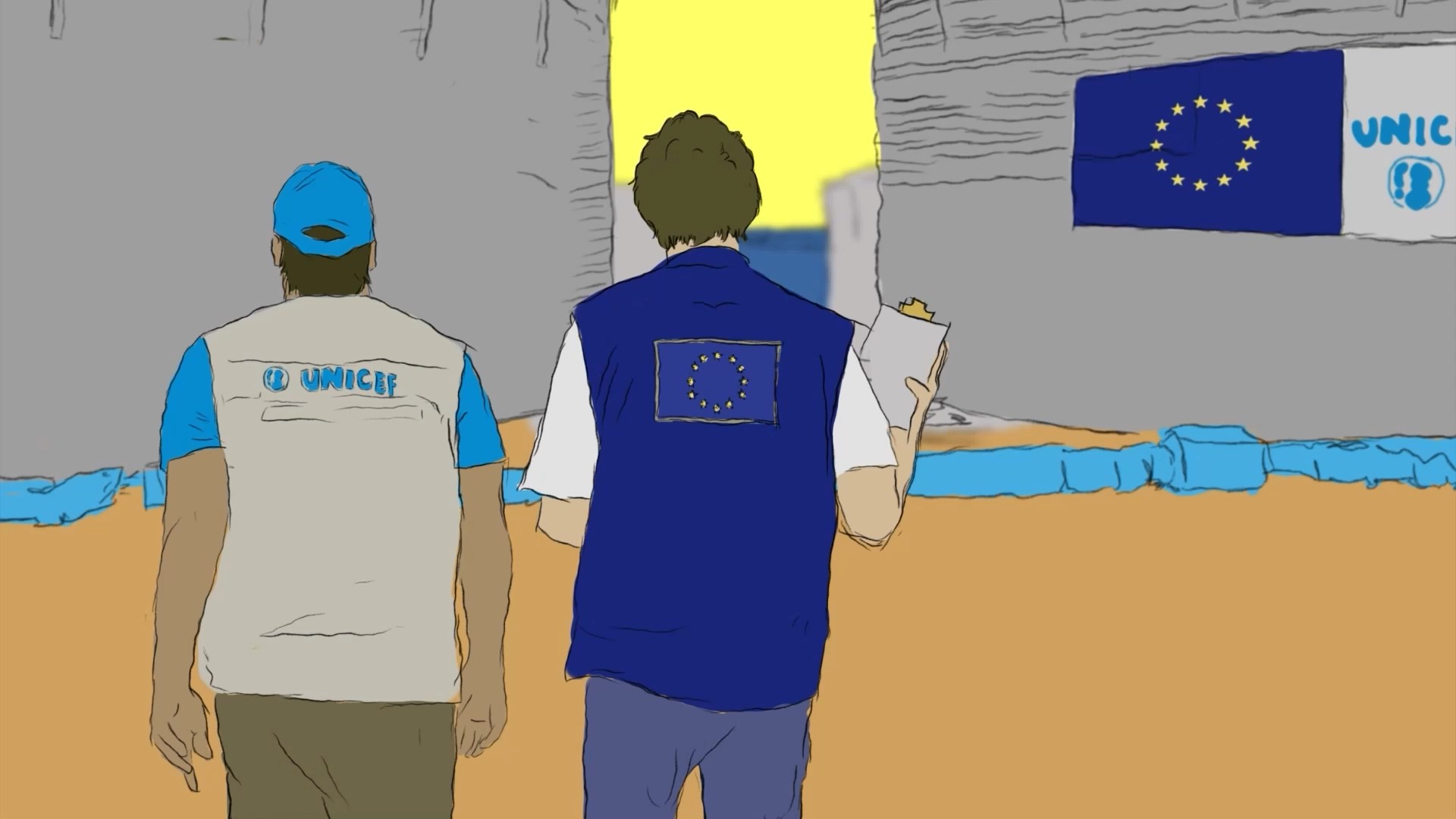
Say so in the brief and invite alternatives. UNICEF needed to explain its water and hygiene support for the isolated Rukban settlement near the Syria-Jordan border, and on-location filming was unsuitable for that story. The story therefore had to be told through an animated film, 2 minutes 6 seconds long, which Fine Line produced in Beirut around a young narrator. When the risk is to contributors, Bond's guidelines also describe AI-generated imagery as an option in sensitive contexts, with a clear caption saying the image is AI-generated. Whichever route you choose, write it into the brief rather than leaving it to be discovered on set.
Which languages, accessibility needs and deliverables should the brief list?
Languages first: state the spoken language of the interviews, the subtitle languages, and whether Arabic and English versions are both required. Then accessibility. The World Health Organization estimates that 1.3 billion people, or 16% of the global population, experience a significant disability (fact sheet published 7 March 2023). A brief that asks for captions and, where the audience needs it, sign language interpretation is planning for a real share of viewers. We offer interpretation in Lebanese, Jordanian and Palestinian sign languages and build it in from the start; the sign language video guide explains what to ask for.
Then deliverables, because everything the film is later asked to do is cheaper if it is listed now. A useful checklist:
- The master film at the length the purpose needs, and any shorter cutdowns for social media.
- Subtitled and second-language versions.
- Photography shot alongside the filming, for reports and print.
- Graphics where the footage cannot label what matters.
The Humanity & Inclusion demining commission shows the value of listing these together. The commission covered a documentary, technical infographics explaining the clearance process, and a photography series shot in the field, all planned as one package before anyone drove to Aley. If you are weighing what each extra item adds to a quote, our video cost guide lists the cost drivers.
Who owns the footage, and can the production company use AI?
Put rights in the brief, not in the contract after the fact. Four lines cover most of it: who owns the final film, who holds the raw footage, how long the film may be used, and what happens when that period ends. Bond's guidance links the last two to consent, since contributors are told how long their image will be kept, and an expiry on consent should be set and shared. Set the usage period in the brief so that it does not outlast the consent your contributors gave.
Add a line on AI. Bond's guidelines now include a chapter on AI-generated images and content, and say that when they are used it should be made obvious. A brief should state whether AI may be used in the production, and for what. If you prefer a fully AI-free process, say so; that is a request we accept and deliver, as we explain in our guide to AI in video production.
What timeline, access and approvals should the brief set?
Give fixed dates (a conference, a report launch, a donor visit) separately from flexible ones, and say who signs off at each stage and how many review rounds are included. For field work, say who arranges access: your program team, a partner, or the production company. For how filming permission works in Lebanon, see filming in Lebanon and, for local help on the ground, what a film fixer does. A schedule that respects the host organization's access rules is part of the ethics, not an extra.
How should you state the budget and judge the bids?
State a budget range. It does not mean the bidder will charge up to it. It tells the production company which of several honest ways to make your film fits your reality. Then publish the criteria you will score: the quality of the proposed approach to consent and safeguarding, relevant work, the team, deliverables and price. Ask every bidder to answer using your ten headings, so the proposals line up side by side. Our guide to choosing a production company in Lebanon covers what to look for in the answers, and our documentary commissioning guide covers the documentary-specific side.
If you already have a draft, or only a purpose and a deadline, send it and we will tell you what is missing and what it takes to film it properly. Our impact videos and documentaries pages show the range of work, and you can email info@finelineprod.com or use the contact page.