
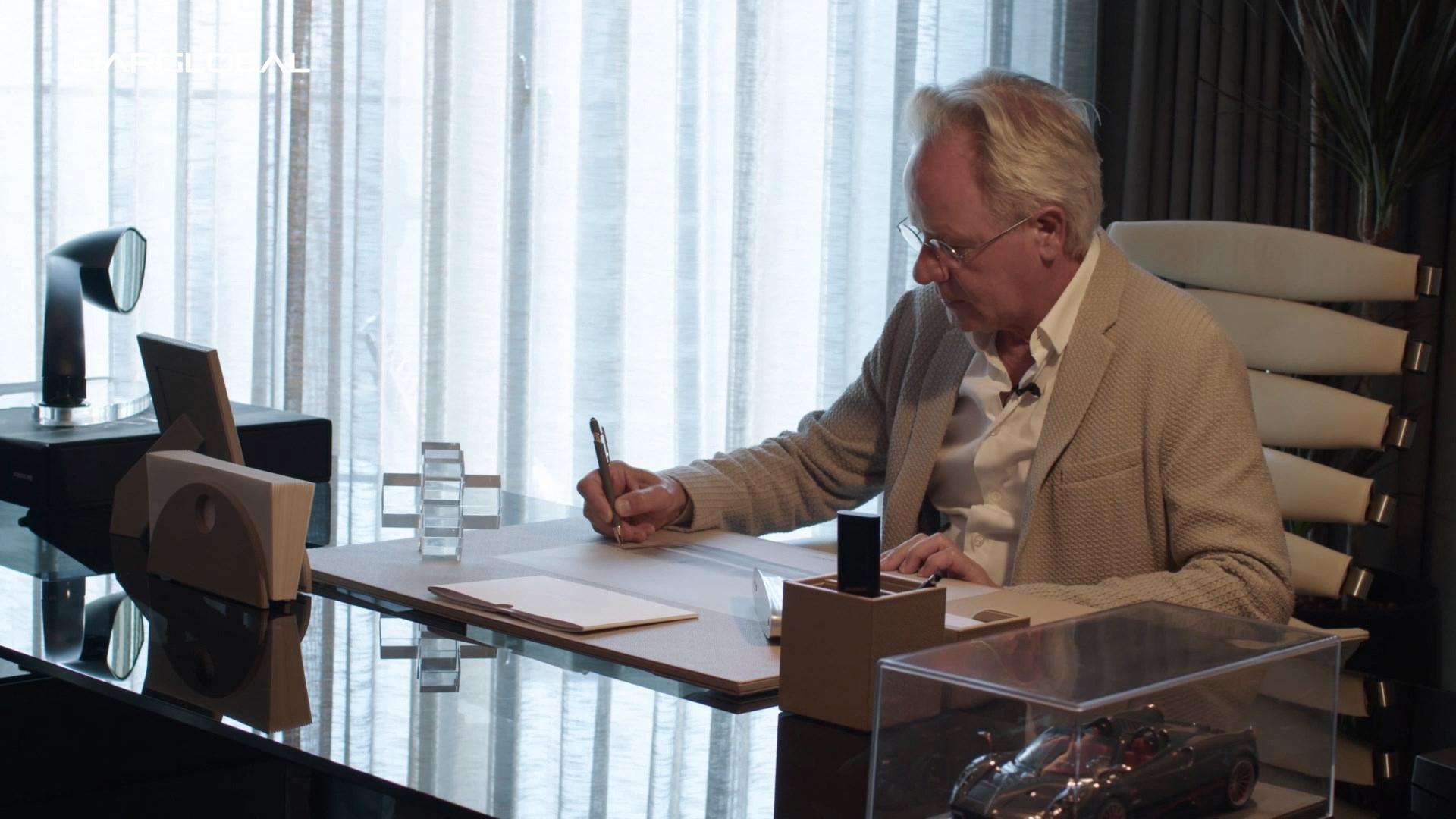
A brand film premieres at a launch event in Dubai. The tower is in Dubai, the client is regional, and the crew that directed and filmed it flew in from Beirut. This happens constantly in MENA production, and this article explains how it works: when a crew travels to the story, when the work travels to the crew, and what changes when a production crosses a border.
We are Fine Line Production, based in Hamra, Beirut. Most of our filming happens across Lebanon, and we also work regionally, including films directed and filmed in Dubai and Qatar. The examples below are our own projects, so this is a first-hand account rather than industry theory.
The market everyone is filming for
The Gulf is where the region's media money is concentrated, and it is growing. PwC's Strategy& MENA media and entertainment outlook forecasts the region's media and entertainment revenue rising by $3 billion to $18 billion by 2028, with consumer spending growing 3.7% from 2024 to 2028, above the global average of 2.7%. The same outlook expects Saudi Arabia and the UAE to remain the dominant markets, taking 66% of the region's media and entertainment revenue by 2028.
For brands, that means campaigns are increasingly conceived for Gulf audiences. For production, it means teams from across the region, very much including Lebanon, are making that content wherever the projects call them.
Model 1: the crew travels to the story
The most direct model: the subject cannot move, so the production does. When Dar Global launched the Davinci Tower, its Dubai collaboration with the car maker Pagani, we directed and filmed the launch film on location in Dubai. The building takes Leonardo da Vinci's fusion of art and engineering as its starting point, and the film follows the architecture and interiors with the patience of a product film. Horacio Pagani, the founder of Pagani, was filmed in the tower itself, which ties the tower to the marque and gives the film an authority renders and voiceover could not manufacture. See Davinci Tower by Pagani.
Flying a crew is a planning exercise: equipment lists that clear customs, schedules compressed so travel days are not wasted days, and location logistics arranged with people on the ground before anyone boards a plane. It rewards exactly the kind of pre-production discipline we described in how a video gets made.
Model 2: the production splits across two countries
Sometimes different parts of one film live in different countries, and the production is designed around that. For Les Vagues, Dar Global's coastal residence in Qatar designed by Elie Saab, we filmed the residence in Qatar, moving through terraces, architectural details and shoreline views. The interviews with Elie Saab were recorded separately in Lebanon and woven into the property footage, so the finished spaces and the thinking behind them share one narrative. Two production locations, one coherent film: Les Vagues by Elie Saab.
This split model is common in MENA because the region's talent, decision makers and locations are rarely in the same city. The film does not show the border; the schedule absorbs it.
Model 3: the work travels, not the crew
The third model needs no flights at all. Post-production is location-independent, so a regional campaign can be shot anywhere and finished in Beirut. The Coco Pops Arabia commercial for Kellogg's came to us as live action needing a full post pipeline, edit, character animation, VFX tracking, compositing and color grading, all handled by the Beirut team so the animated character world and the real performers read as one continuous 20-second spot for the regional market: Coco Pops Arabia.
Remote review makes this routine: clients approve cuts from another country, notes come in overnight, and the finished master ships in whatever specification each market's broadcaster requires.
What actually changes at the border
Working across MENA markets changes practical things, not the craft:
- Approvals go remote. The client watches cuts from Dubai or Doha while the edit happens in Beirut, so the review process has to be planned like a deliverable: clear versions, clear deadlines, one consolidated voice for feedback.
- Deliverables multiply per market. Different broadcasters, different platforms, sometimes different languages or subtitle requirements for the same campaign.
- Logistics need local knowledge. Permissions, locations and timing work differently in each country, which is why cross-border shoots are planned with people who know the destination, not improvised on arrival.
What does not change is the filmmaking itself. The same directing, cinematography and post-production standards travel with the team.
The honest version of "we work in the Gulf"
We are not a Dubai company and do not claim offices there. We are a Beirut production house that has directed and filmed for Gulf launches when projects called for it, and that finishes regional work in its Beirut post pipeline. If you are planning a shoot in Lebanon and need a production team on the ground, or a Gulf project that suits one of the three models above, the full picture of what we do is on our services page. Email info@finelineprod.com, call +961 1 741 744, or use the contact page.