Most briefs for social media video production in Lebanon start the same way: "we need content for TikTok and Instagram." That sentence hides five decisions. Vertical or horizontal. A series or a single film. A new shoot or cuts from a bigger one. Arabic, English or both. And what, exactly, the videos are meant to do. Settle those before the first call and the quote, the shoot and the edit all get simpler.
We are Fine Line Production, a video production house in Beirut making films since 2017. Social media content is one of the ten services on our services page, described there as platform-native series made to be watched, not just scrolled past. That includes vertical video cut for Instagram Reels and TikTok, with the same crew and the same standards as everything else, framed for the platform. Here is how we would walk a client through those five decisions.
Where audiences in Lebanon are watching
The audience is spread across several platforms at once. DataReportal's Digital 2026: Lebanon report counts 4.58 million active social media user identities in Lebanon in October 2025, equivalent to 78.1% of the population. Meta's advertising tools showed 2.95 million Instagram users in late 2025, and Google's showed 3.12 million YouTube users.
TikTok's own advertising tools reported 4.58 million users aged 18 and above, which the same report notes is 113.4% of all adults in the country, a figure it republishes as is while warning that it may seem implausible. That is a useful reminder: platform numbers are advertising audiences, not headcounts. The direction is still clear. No single platform holds the whole audience, so a plan built around one format leaves people out.
Vertical or horizontal?
Decide by where the video will play. TikTok, Reels and Stories are vertical. YouTube, a website, a conference screen and TV are horizontal. Most campaigns need both, and the cheapest moment to plan for both is before the shoot, not after the edit.
The reason is framing. A horizontal film cropped to vertical loses most of its picture, and whatever mattered at the edge of the frame goes with it. When both formats are planned, the camera team composes so that the action survives a vertical crop, or shoots dedicated vertical setups for the moments that need them. For the UNDP Self Independence Academy we built one horizontal and one vertical teaser, and the vertical cut was made for Reels and TikTok rather than trimmed from the wide version.
A series or a one-off?
A single film suits a launch, an announcement or an event recap. A series suits anything that needs people to come back: lessons, tips, conversations, a brand voice that builds over months.
The Self Independence Academy is the clearest series in our work. The brief was behavior change, so instead of one hero film we built a repeatable lesson format: 50 videos featuring 23 creators, with scripts written in batches and sorted into a handful of formats so the series felt like one academy and not 50 separate posts. The campaign reached 459,000 men and recorded 20,000 learning engagements. The case study explains how a series that size gets produced.
Our own podcast works the same way at a smaller scale. Kelmeh Wehdeh is a talk series we produce, shoot and cut in-house, now at three seasons and 19 episodes, and its conversations also live as vertical reels on Instagram. One long recording, many short pieces. Our podcasts page shows both.
If you choose a series, the format matters more than any single episode. Fix the structure, the length and the look, and leave the person on camera as the variable. Shooting several episodes per day spreads the setup across all of them.
Cutting social versions from a bigger shoot
Social video does not always need its own shoot. Much of our brand work, from commercials to company films, is delivered with social cuts of the same material. For the ROCK Mutual Insurance launch, after the four commercials were delivered we edited cut-downs in vertical and horizontal formats, so the same stories could run as reels, stories and feed posts without forcing a horizontal film into a vertical frame. Our brand video production in Beirut is on the campaigns page, and the spots themselves are on the commercials page.
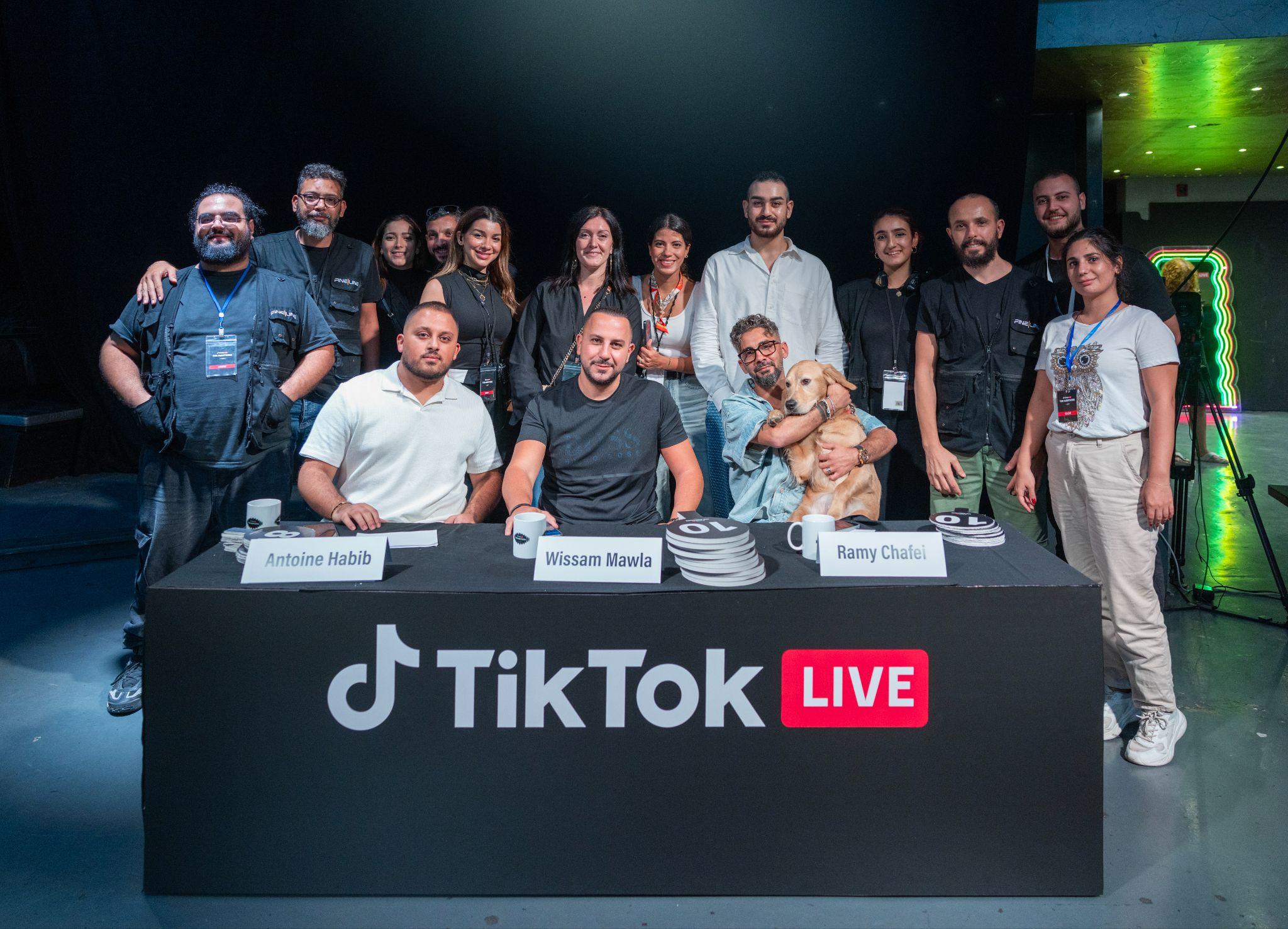
Events work the same way. On activations our crews cut recaps within hours, with reels made for every platform. When we stream an event, every camera and audio channel is recorded in isolation, so clean material is ready for short edits straight after. In 2023 we filmed and live-streamed a TikTok event in the MENA region, and the short recap reel of that coverage is on our live streaming page.
The catch is that cut-downs are only as good as the coverage behind them. If social versions are coming, say so in the brief. It changes the framing, the shot list and the moments the director makes sure to get: a line that still works with the sound off, a shot that tells the story in a few seconds. We covered the broader version of this in our guide to corporate video production in Lebanon.
Arabic, English or both
We script and produce in Arabic and English, and we have no language to sell you. The right choice is the language your audience talks about you in, and the reasoning, with the data behind it, is in Arabic vs English video content.
Two points are specific to social. First, plan for people watching with the sound off: on-screen text and subtitles carry the message, so they are part of the script, not an afterthought. Second, Arabic text runs right to left, so a video planned in both languages needs on-screen graphics designed for both directions. Both are cheap to plan before the shoot and slow to fix after it.
TikTok and social video: what to put in the brief
You do not need a script or a content calendar. You need answers to these:
- Which platforms? TikTok, Instagram, YouTube, LinkedIn, Facebook, or a mix. This decides the formats.
- What should the videos do? Launch, explain, recruit, change a habit, keep an audience coming back.
- One film or a series? If a series, roughly how many videos and over what period.
- New shoot or existing material? A dedicated shoot, social cuts from a commercial or company film, or coverage of an event.
- Who appears? Your staff, creators the audience already follows, actors, or nobody at all.
- Which languages? Arabic, English or both, and whether subtitles are needed.
- Organic posts, ads or both?
- When does the first video need to go out? And who signs off.
With those answers, a production house can tell you whether you need one shoot day or several, which formats to plan for, and what a realistic quote looks like. If you are still comparing teams, see how to choose a video production company in Lebanon.
Talk to us
Whether it is a TikTok series, a set of promotional videos for a launch or social cuts from a bigger campaign, send us the answers above and we will tell you what it takes.