Film studio rental in Beirut is easier to get right when you decide three things before you write to anyone: what you are shooting, who will run the room, and what you need the room to give you that your own location cannot. Everything else on a studio checklist follows from those answers. This guide walks through the questions we would ask before booking any studio, using our own space in Hamra as the worked example.
We are Fine Line Production, a production house in Beirut working since 2017. The studio at 204 Matta Building, Makdessi Street, Hamra is where we shoot our own productions and record our two shows, Kelmeh Wehdeh and ArtLine, and it is also available to rent on its own. We only describe what is on our studio page. For anything that is not published there, such as exact dimensions, we say so, because a checklist is only useful if it separates what you have been told from what you have assumed.
Why rent a film studio in Beirut instead of shooting on location?
A studio gives you control. Light does not change when a cloud passes and traffic does not appear in your sound. That control matters most for interviews, talks, product and portrait photography, podcasts and anything shot against a designed background. Locations are better when the place itself is the story. If you are filming a street, a village or a building, you want the real thing. If you are filming a person talking, you usually want a room you can repeat.
The second reason is repeatability. A series needs episode ten to look like episode one, and a fixed set with a fixed lighting plan does that. Our guide to booking a podcast studio in Beirut covers that case in detail. This article is about the wider decision: photography, interviews, video shoots, green screen and studio streams.
What can you shoot in a Beirut film studio?
Ask the studio what it has actually been used for, not what it could theoretically do. In ours, clients book the room for photography, video shoots, podcast recordings, interviews and talks, and green-screen work such as sign-language interpretation shoots. It is also where our studio streams go out from: a talk, an interview or a product demonstration goes from Hamra to several platforms at once, with video calls and presentations brought into the picture. Our live streaming page explains how that works.
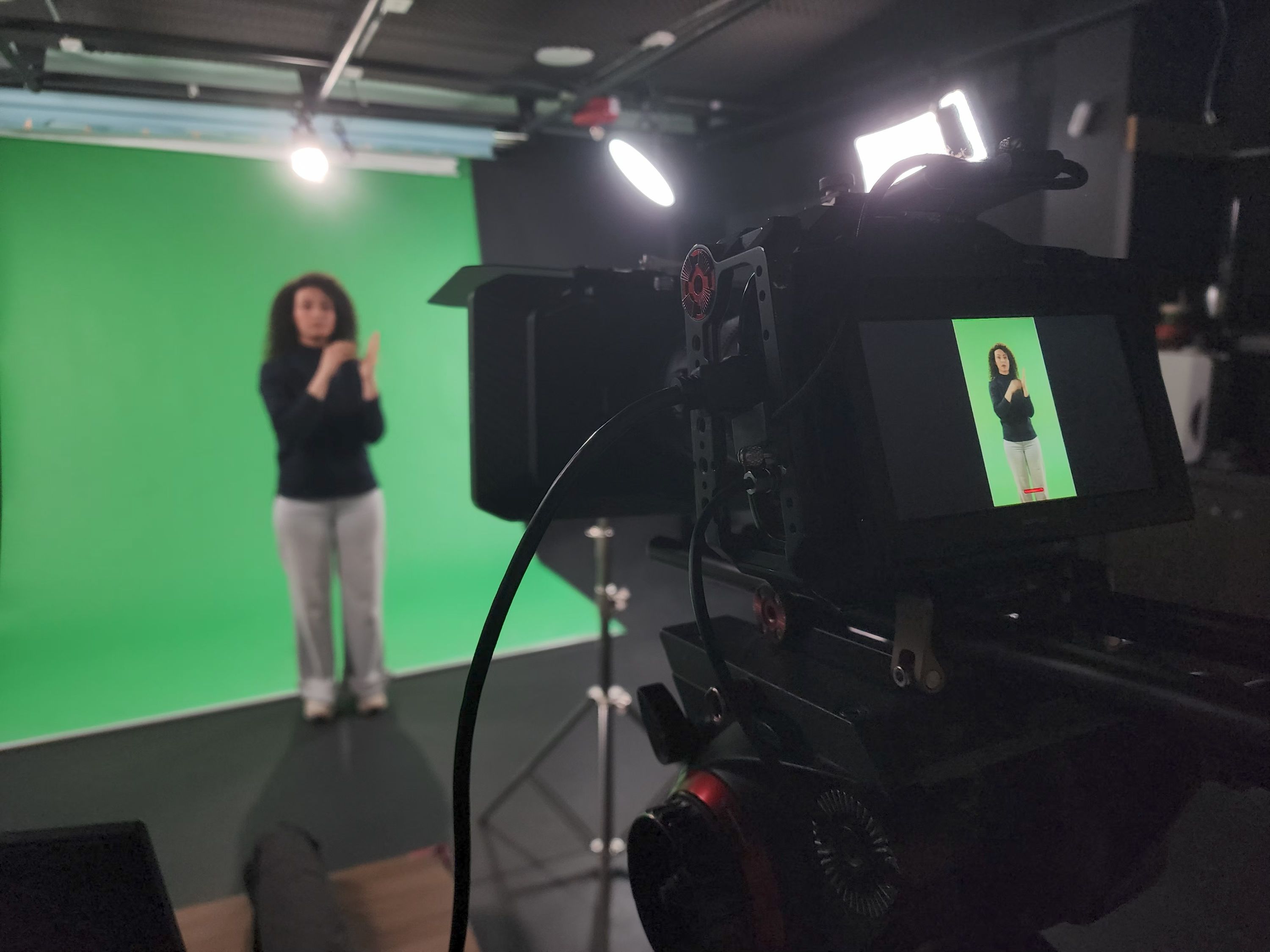
If your use is unusual, say so in your first message. A green-screen shoot, a studio stream and a still-life product session each need different things from the same room. For a sign-language video, our notes on sign language video production explain the format, and the practical steps of commissioning one are in our guide to adding a sign language interpreter to a video in Lebanon.
What backdrops, lighting and sound should a studio have?
These are the three things that make a rented room feel like a studio and not just an empty space. Here is what ours offers, and what you should ask any studio to describe in the same plain terms.
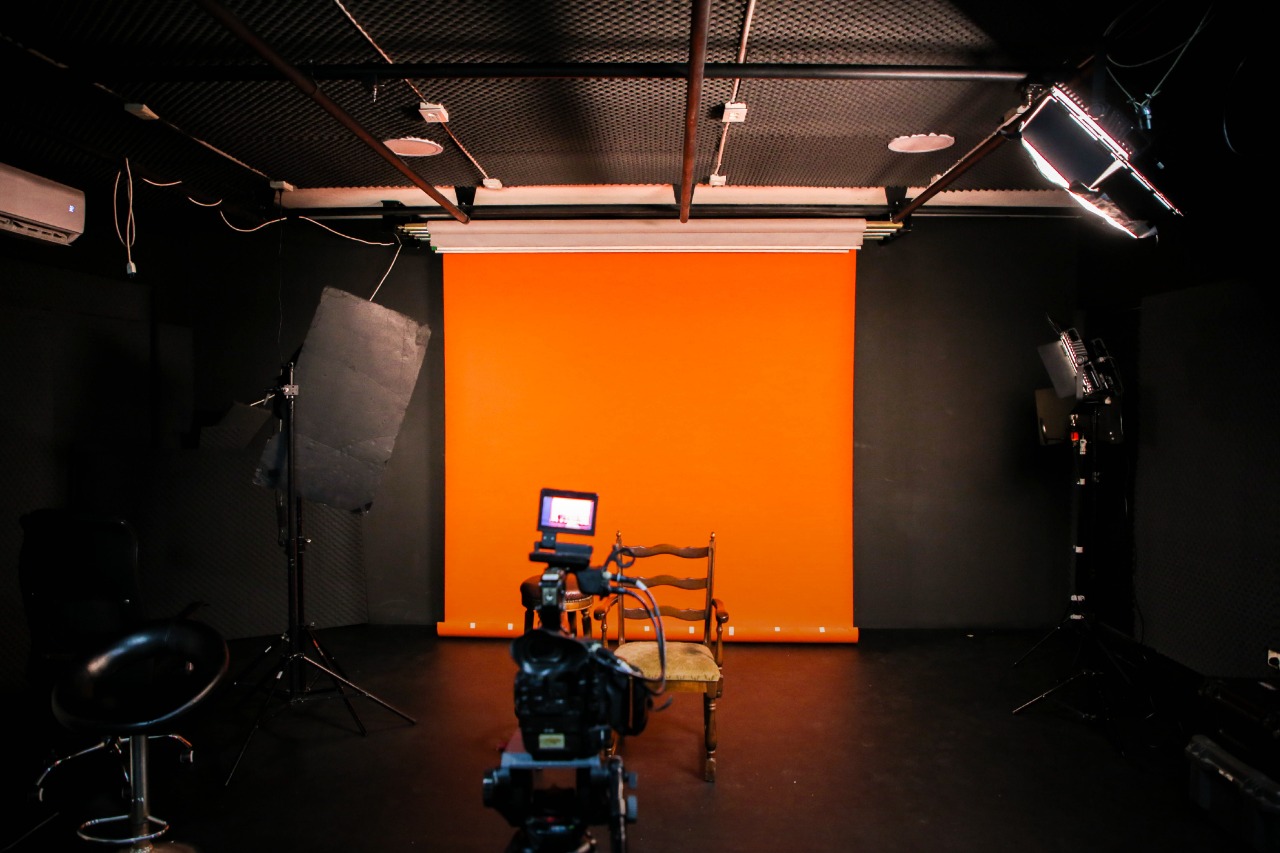
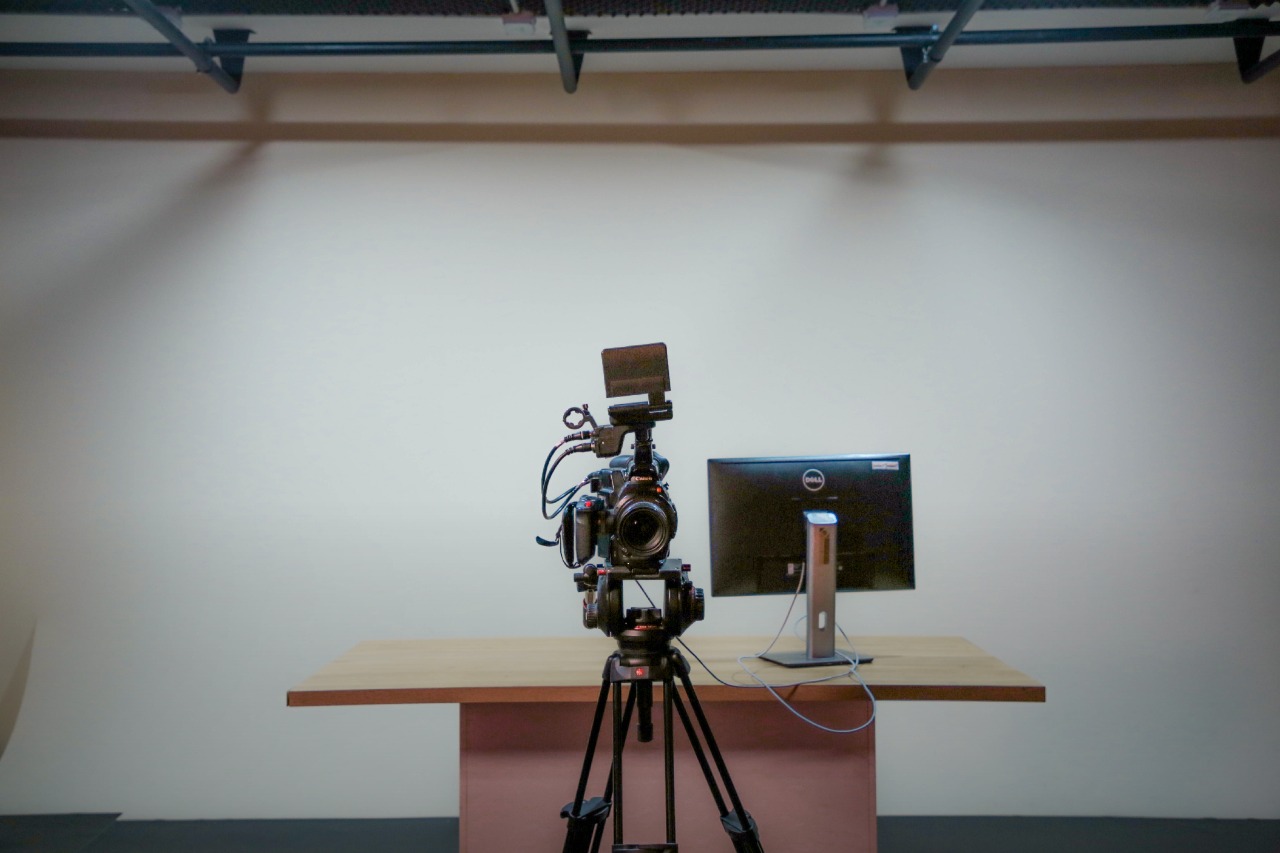
- Backdrops. Ours has colored paper backdrops, a plain white wall for interviews and talks, and a green screen. Ask what is available, who supplies the colors you need and whether you can bring your own.
- Sound. Ours has an acoustic-treated black-box side for sound. Ask where in the room the quiet area is and what you will hear from outside while recording.
- Lighting. Ours is equipped with professional lighting. Ask whether lights are included in the rate and whether the setup can change between photography and video.
- Photography and video together. Our room is set up for both. If you need stills and film on the same day, confirm that the studio can switch without a long reset.

What should you check before you book a studio?
This is the checklist we would use. Most items are free to ask and expensive to discover on the day.
- The room itself. Ask for dimensions, ceiling height and photos from the angles you will shoot. Our studio page does not list dimensions, so ask any studio for them in writing. Do not assume any studio is the size it looks in a wide-angle picture.
- Backup power. Lebanon's grid cannot be taken for granted. Lebanon's national energy agency, LCEC, reports that private generators supplied 51% of Lebanon's electricity in 2023. Ask what happens to your lights, cameras and cooling if the supply drops mid-take, and who switches over.
- Access and loading. Ask about the address, the floor, the lift or stairs, where a car or van can stop, and how you bring in boxes, props or a rack of clothes. Ours is at 204 Matta Building, Makdessi Street, Hamra.
- Sound from outside. Ask when the room is quietest and whether the acoustic side can be used for the take you need.
- What is included. Lights, sound, backdrops, a teleprompter and a technician are separate questions. Ask for each one by name. Presenters who read to camera can use our free browser teleprompter on any laptop or phone.
- Who runs the room. Someone has to watch levels, framing, batteries and storage. Ask whether that person is included or whether you bring your own.
- Your files. Ask how footage leaves the room: your own drive, a card handover or a transfer afterwards.
- Time and overtime. Ask what the booking covers, including setup and pack-down, and what happens if the shoot runs over.
- Changes and cancellation. Ask what happens if you need to move the date.
Dry hire, hire with crew or a full commission: which is right?
There are three ways to use our studio, and most good studios will have an equivalent of each.
- Dry hire. You rent the room and bring your own people. This works when you already have a camera operator, a sound recordist and a plan.
- Hire with crew. You rent the room with crew from our team recording sound and video while you host. This suits talks, interviews and shows where you want to concentrate on the content.
- Full commission. We produce the whole piece, from concept to delivery, the way we produce our own series. This suits you if you have a message and need a finished film.
Which one fits is usually decided by one question: who will be responsible if the audio is bad? If you have a crew you trust, dry hire is fine. If you are not sure, hire with crew is the safer first booking. Our guide on how to choose a video production company in Lebanon covers the same decision at project scale, and what moves a corporate video budget explains how crew and shoot days change a price.
How much does it cost to rent a film studio in Beirut?
We do not publish a rate card, and we would be wary of any page that quotes one without knowing your shoot. Our rate depends on the hours you book, the number of cameras, whether a technician is included and whether editing is part of the package. Those four factors are a good template for comparing quotes from any studio: ask each one to price the same hours, the same number of cameras and the same crew, then compare.
To get a useful quote, send your dates and what you plan to record. That is all our studio manager needs to reply with what is possible.
How to book the Fine Line studio
Message our studio manager on WhatsApp at +961 3 061 979 or email studio@finelineprod.com with your dates and what you plan to record. You can look inside on the studio page and in our short studio film, and crew, gear and post-production can be added from the Fine Line team when you need them. If the room is for a show, the guide to starting a podcast in Lebanon is the place to begin.
That is the checklist. If you take only one thing from it, ask every studio to describe the room, the power, the crew and the rate in writing before you pay. Follow our work on our links page, or tell us about your shoot.