Podcasts have become a video format, and that changes what "a studio" has to be. In Edison Research's Infinite Dial 2026, a survey of 2,050 Americans aged 12 and over run in January 2026, 58% had consumed a podcast in the past month and 57% had both listened to and watched podcasts. The region is listening too: Spotify's MENA team, citing a YouGov study in a 2023 Campaign Middle East report, described Saudi Arabia as having 67% of adults listening to an hour or more of podcasts a week. A show launched in Beirut today will be watched as much as heard.
We are Fine Line Production. We record our own two shows, Kelmeh Wehdeh, now at three seasons and 19 episodes and counting, and ArtLine, two seasons of long conversations with Lebanese artists, in our studio in Hamra, and the same room is available to rent. This article is what we would tell a friend booking a podcast studio in Beirut for the first time. Our earlier guide on how a podcast gets produced in Lebanon covers the show itself. This one covers the room and the session.
What the room should give you
- Sound first. Clean audio is the one thing a podcast cannot fix later. The room should be treated or quiet enough that you are not fighting traffic, echo or air conditioning, with a microphone per voice and someone who knows how to set levels.
- Light that holds for a season. Video podcasts live or die on consistency. A set that can be lit the same way every episode means episode one and episode twelve look like the same show.
- More than one angle. A two person conversation needs at least a wide shot and a close-up on each speaker, so the edit can breathe. Ask how many cameras a session includes.
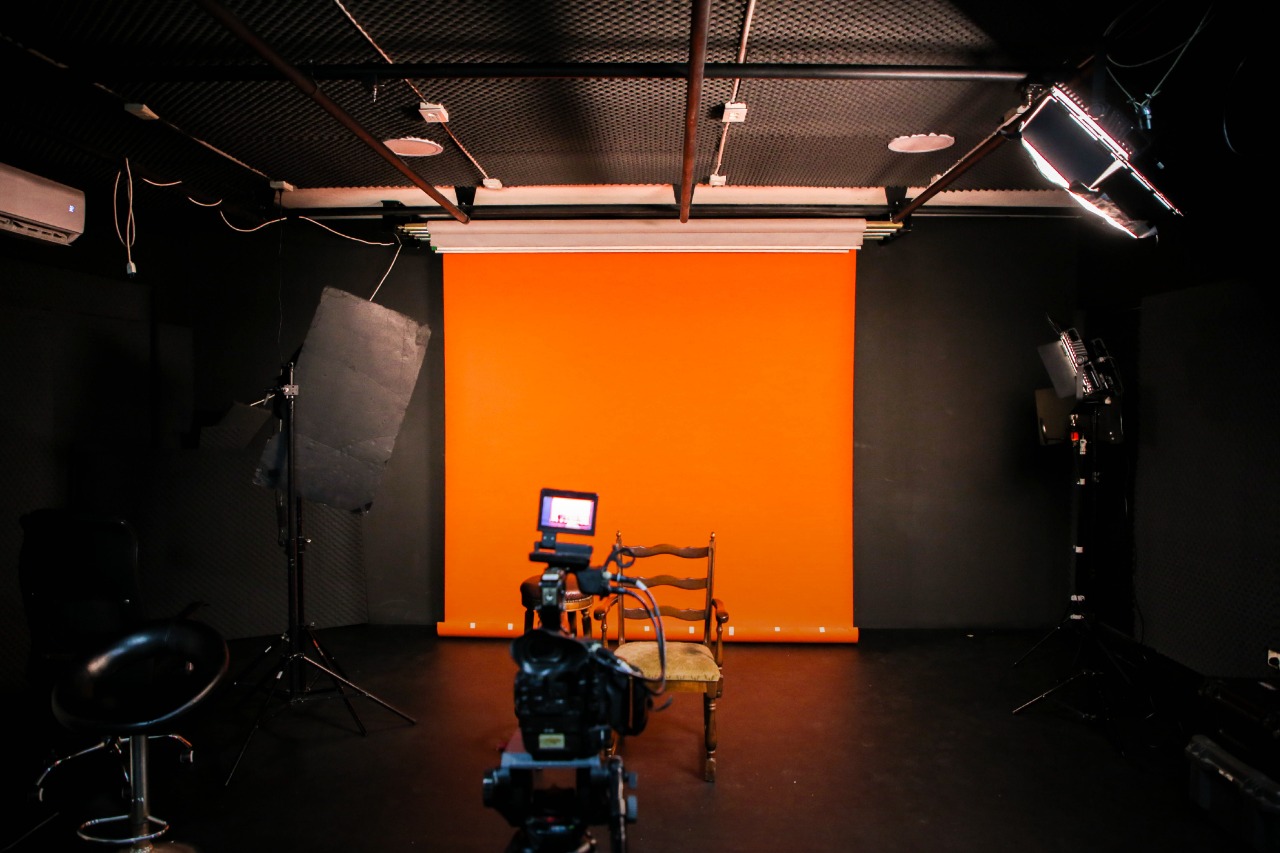
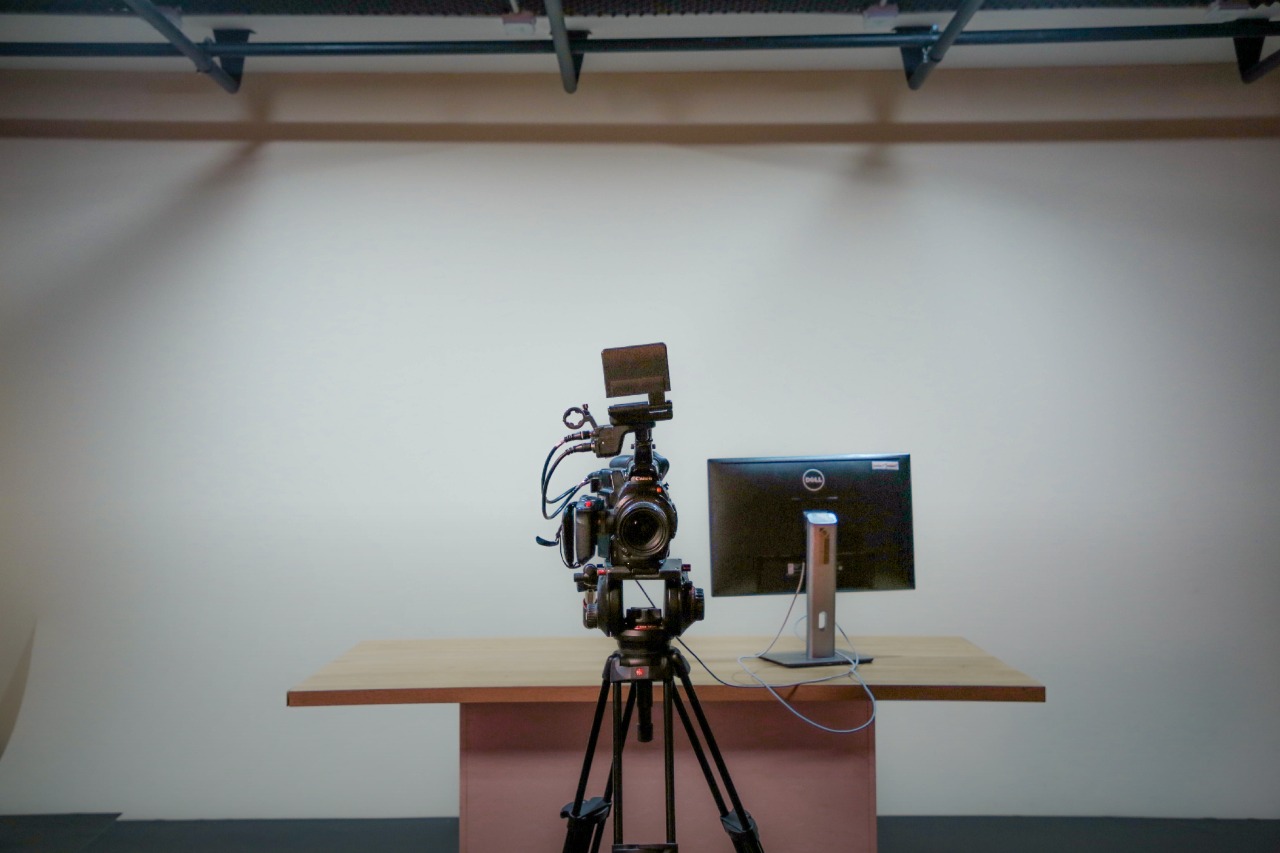
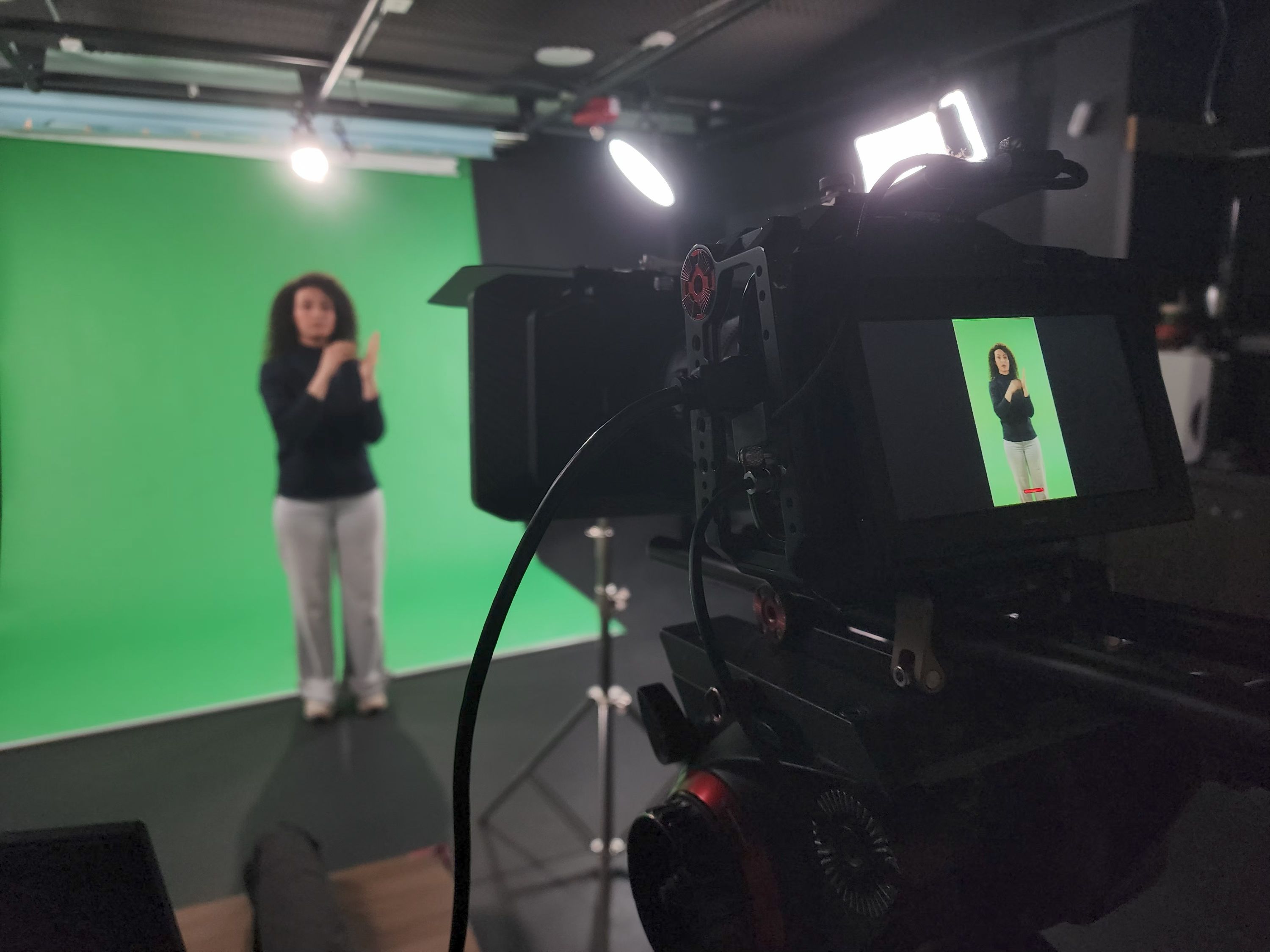
- A backdrop you can own. Our studio runs on a flexible setup: colored paper backdrops, a plain white wall, a green screen for shows that want a designed world behind them. The point is that your show looks like yours, not like the studio's last client.
- Somewhere for the guest to breathe. Guests arrive nervous. A chair outside the frame, water, and five quiet minutes do more for an episode than any microphone.
How a session actually runs
A recording block is longer than the episode. For a 45 minute conversation, plan on arriving early for setup and sound checks, recording with a margin for restarts, and some time at the end for pickups: the intro you want to redo, the question you forgot. Two episodes back to back are realistic in a half day if the guests are punctual. Three starts to show on faces.
Someone needs to run the room, watching levels, framing, batteries and cards while you concentrate on the conversation. In a rented studio that is either a technician included in the booking or a crew you bring. Ask which before you book.
Decide before you arrive how you will record. A single mixed track is the easiest to handle. Separate tracks per voice are what an editor wants. Video needs each camera recorded on its own as well. These are five minute decisions in advance and expensive regrets afterwards.
What to bring
- A run sheet with your questions, in the order you want to ask them.
- Your intro and outro text. If you read them to camera, our free browser teleprompter runs on any laptop or phone and keeps the script in your own browser.
- The guest's name, title and spelling, for the name titles in the edit.
- Clothes without fine stripes or pure white, which cameras handle badly.
- Logo or artwork files if the session includes recording an opener.
- A hard drive, if you want the raw files on the day.
Studio only, or studio with a crew?
There are three ways to use a studio like ours. Rent the room and bring your own people. Rent the room with crew from our team recording sound and video while you host. Or commission the show: concept, recording, editing and delivery, the way we produce our own two series. Which one fits depends on how much you already have in place, and it changes the budget more than anything else. A season is a logistics exercise, as our podcast production guide puts it: plan episode twelve, not just episode one.
Where the show goes afterwards
A studio session produces more than an episode. The full episode goes to YouTube and the audio platforms, and short vertical clips carry the show to people who will never press play on a full hour. Our own Kelmeh Wehdeh channel runs full episodes alongside a steady stream of short clips. Recording with clips in mind, framed tight enough on each speaker and with each camera on its own track, saves hours in the edit later.
Booking the Fine Line studio
Our studio is at 204 Matta Building, Makdessi Street, Hamra, Beirut, with professional lighting and sound and a flexible setup, and it is the same space where we shoot our own productions. To ask about availability and rates, message our studio manager on WhatsApp at +961 3 061 979 or email studio@finelineprod.com. Crew, gear and post-production can be added from the Fine Line team. Take a look inside on the studio page and in our short studio film.