
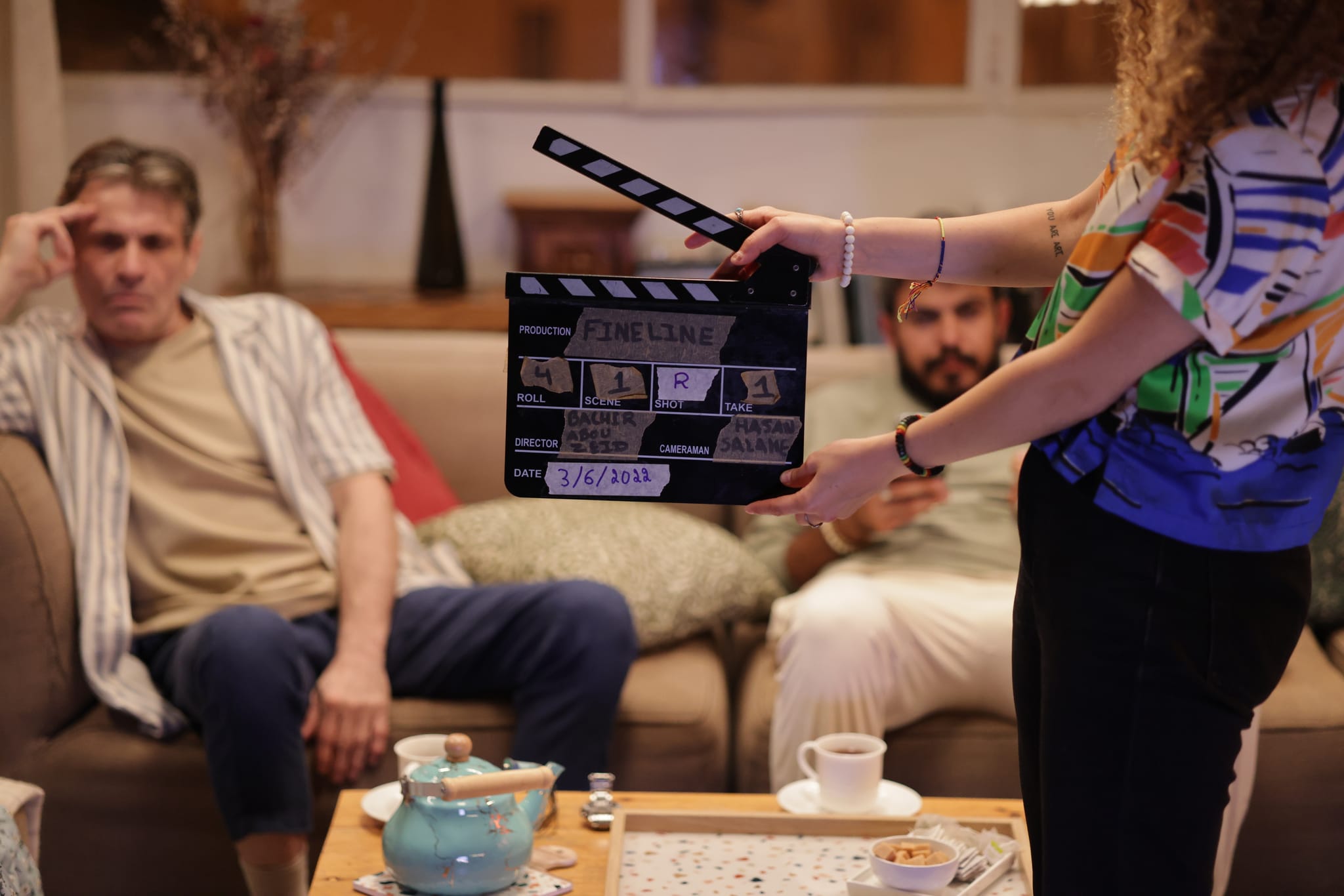
Music video production in Beirut runs on the same craft as any film shoot, with one difference: the song is finished before anyone picks up a camera. The track sets the length, the pace and the mood, and every decision after that serves three or four minutes of music. This guide is for artists and labels planning a video here: how it gets made, what to send a production team, and where the time goes.
We are Fine Line Production, a production house in Hamra, Beirut, working since 2017. When the singer Faia Younan released her album "Tales of the Heart", we made the videos. In her words on our testimonials page: "Fine Line Production produced music videos for all the songs in my 'Tales of the Heart' album." She was releasing a song every week or two while filming was still going on, which is about as demanding as a music video schedule gets.
What music video production in Beirut involves
Most music videos pass through the same five stages, whatever the budget:
- The idea. A story, a performance, a mood, or a mix of the three.
- The treatment. A short document with the concept, look, locations and references, so everyone pictures the same video.
- Pre-production. Locations, sets, casting, styling, the shot list and the schedule.
- The shoot. One or more days of filming, with the track played back on set.
- Post-production. The edit, color grade, any effects, and the versions each platform needs.
At Fine Line all five happen under one roof, as our services page explains. The general process is covered in how a video gets made in Lebanon; below is what changes when the film is built around a song.
Start with the song and a short brief
A production team can only plan around what it has heard. Before the first meeting, send:
- The track. The final mix if it exists, or a version whose timing will not change. A video is cut to the music, so a new edit of the song after the shoot can break the video.
- The lyrics. With a translation if anyone on the team does not speak the song's language.
- Three to five reference videos. Say what you like in each one: the color, the camera movement, the editing pace, the setting.
- The release date and platforms. They decide which versions are needed and how much time there really is.
- A budget range. Even a rough one. It tells the team whether to plan one location or four, one shoot day or three.
From there, the treatment comes back to you. Read it with one question in mind: does this still feel like your song? It is far cheaper to change a sentence in a treatment than a scene on set.
Locations, sets and the studio
Location is often the biggest creative and practical decision in a music video. Faia Younan's description of her album run lists "location hunting" right after brainstorming, and that order is about right. Each location brings its own permissions, light, sound and travel time. Aerial shots come through the drone operators we work with rather than an in-house department.
Sometimes the right place has to be built. A set gives full control of color and light, which matters when an artist performs the same song many times in a row.
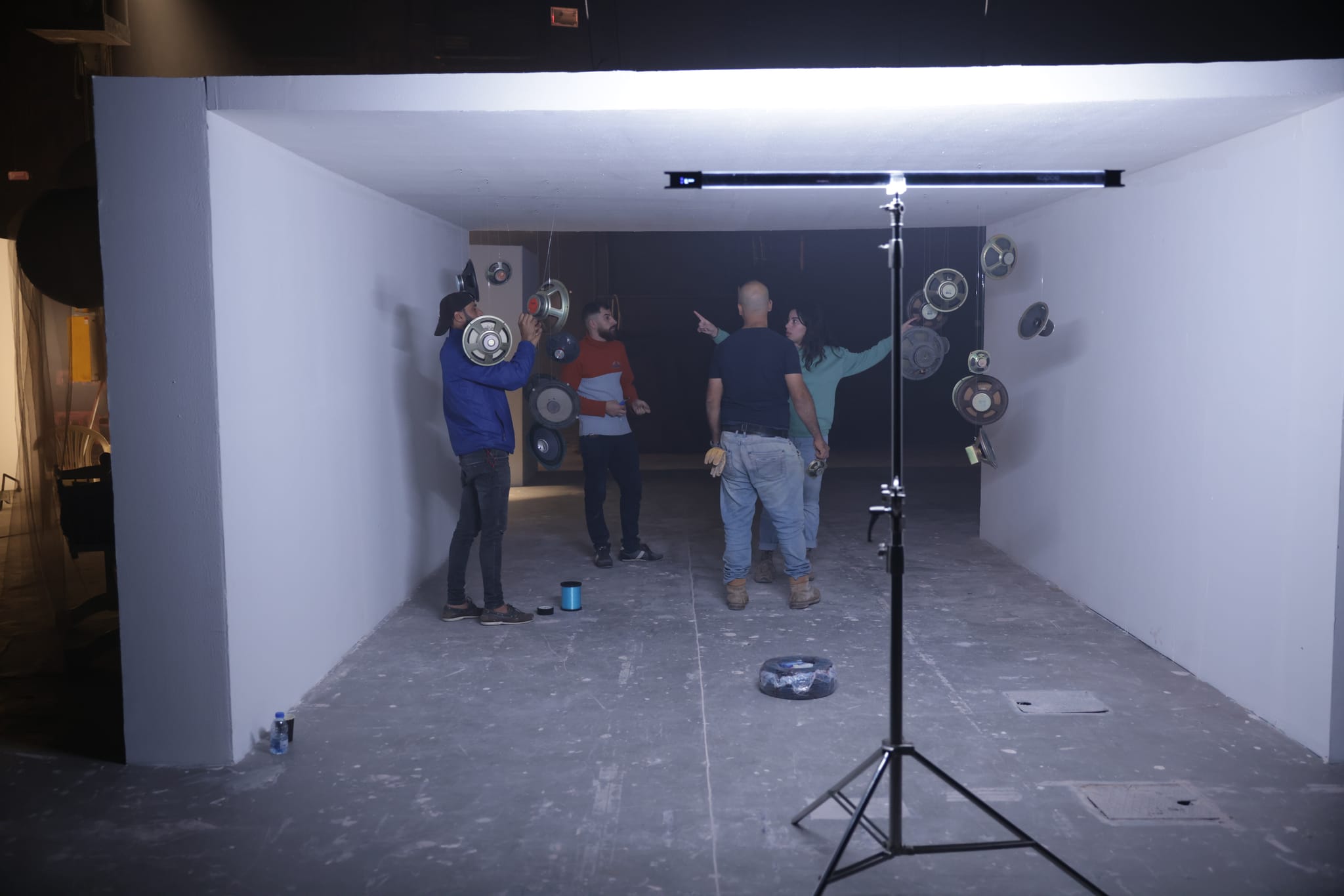
For performance passes, close-ups and anything on a green screen, a studio is often the simplest answer. Our studio in Hamra has colored paper backdrops, a plain white wall, a green screen and an acoustic-treated black-box side, with professional lighting and sound. It can be rented on its own with your own crew, rented with crew from our team, or used as part of a full production. See the studio page, or our guide on what to check before you book a film studio in Beirut.
Shoot day: playback, performance and coverage
On a music video set, the song is played back through speakers while the artist performs, so the lip sync on screen matches the released track. Expect to hear the song many times. A common approach is to film complete performances of the whole song from several angles, then shoot the story scenes or details separately. That gives the editor a full performance to cut back to at any point in the track.
Some practical points that save time on the day:
- Know the song cold. An artist who is unsure of a line will show it in close-up.
- Mark the moments that matter. The chorus, the bridge, the last line. Tell the director which ones you want to land hardest.
- Plan the vertical version now. If clips will run on Instagram or TikTok, say so before the shoot so the camera can frame for both shapes.
Edit, color and the versions you will need
The edit is cut to the music, beat by beat. Color grading then gives the video one look across every location. At Fine Line, our co-founder Hasan Salame leads the work from concept through cinematography to color, VFX and motion graphics.
A typical release list includes the full landscape video, vertical clips for social, a subtitled version in Arabic, English or both, and sometimes a short loop for streaming services. Spotify's Canvas, the short visual loop that plays in place of the album artwork while a track is playing, has to be 3 to 8 seconds long and vertical at 9:16, according to Spotify's Canvas guidelines (checked 22 November 2026). Platform specifications change, so confirm each one before the edit is locked.
What an album of videos teaches
Making one video is a project. Making a video for every song on an album, released one every week or two while filming continues, is a production line. In Faia Younan's words, it took "long hours and days of brainstorming, location hunting, planning, filming, filming and more filming, editing for days, coloring". If you are planning a series of videos, a few things follow from that kind of schedule:
- Plan the run as a whole. Lock the release calendar and the song order early, and work backward from each date.
- Give each song its own idea, but one family look. The videos should feel like they belong to the same album.
- Overlap the stages. While one video is in the edit, the next is being shot and the one after is being planned. That only works with one team carrying the whole run.
Who is behind the camera
Fine Line is a core team of five in Hamra, backed by more than thirty trusted freelancers: editors, videographers, animators, drone operators, photographers, directors, producers and colorists. Our managing partner and lead producer, Said Halawi, runs productions from first call to final delivery. Hasan Salame, our co-founder and cinematographer, brings more than seventeen years behind the lens, and his cinematography has been awarded at festivals in Lebanon, Brazil and India.
Music videos are part of Hasan's own history too. In his personal portfolio, outside Fine Line, he is credited as cinematographer on music videos for other directors, including Roy Akiki's video for Mouhamad Khairy's "El Haq Alayk" and Rindala Kodeih's video for Nelly Makdessy's "El Helo Tal", and as director of several Faia Younan videos from 2019. Filming people who sing is familiar to the wider team as well: our documentary on the Al Fayhaa Choir in Tripoli, for Save the Children International, followed around thirty children through a five-month training program.
What does a music video cost in Lebanon?
We do not publish a rate card, and we would be wary of anyone who quotes a music video before hearing the song. The cost moves with a handful of things: the number of shoot days, the number and type of locations, whether a set is built, the size of the crew and cast, styling and art direction, any drone, effects or animation, and how many versions you need at the end. A clear brief with a budget range is the fastest way to a real number, and to a treatment that fits it.
Talk to us
If you have a song and a release date, send us the track, the lyrics, a few references and your timing. We will tell you what we would do with it and what it involves. Email info@finelineprod.com, call +961 1 741 744 or +961 3 061 979, or use the contact page. If you only need the room, the studio can be booked on its own.
Thank you for reading. To see what we are working on, follow us or start a project below.